Friday, Nov 27, 2026Fri, Nov 27, 2026
CYBERSECURITY

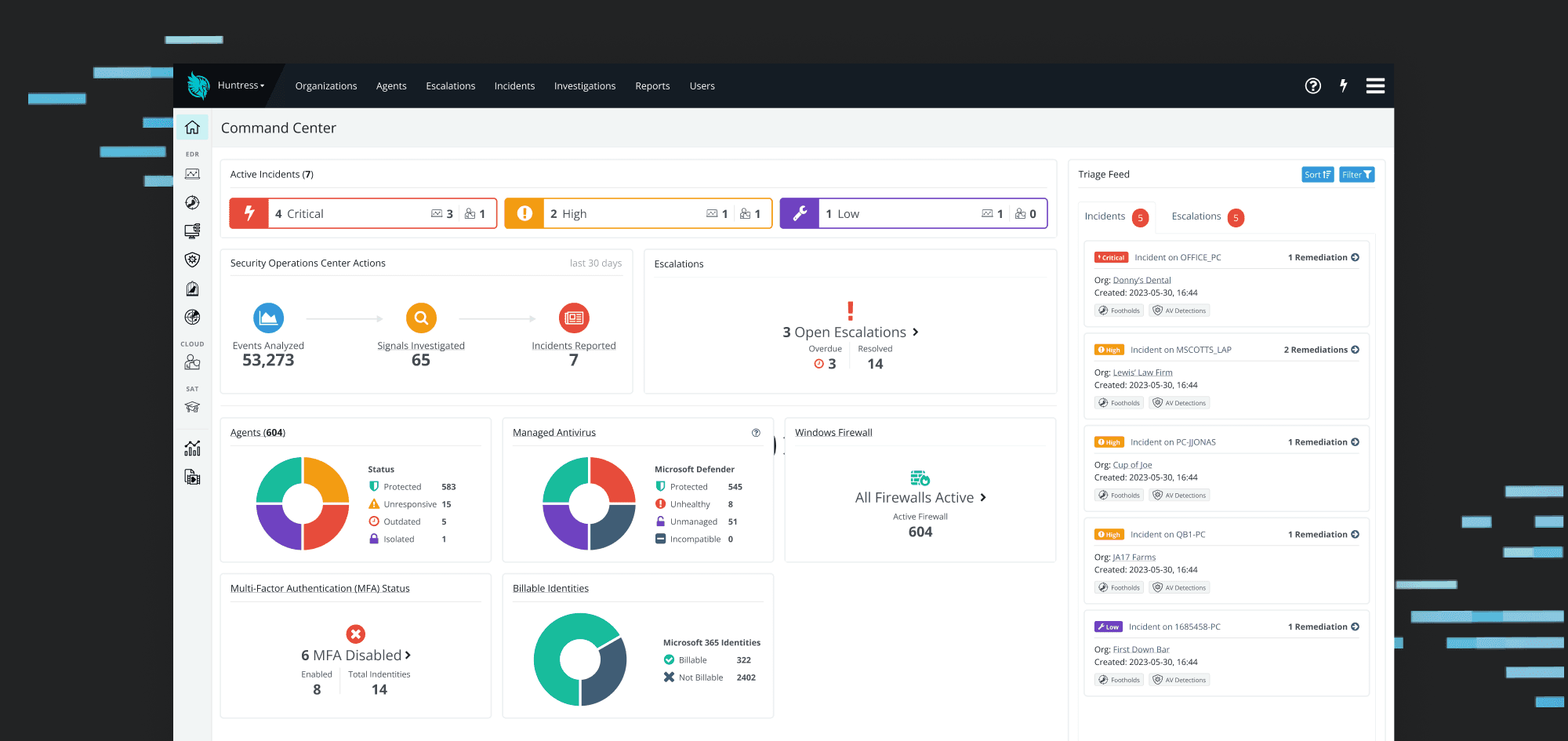
Microsoft releases July 2026 security updates

Microsoft's July 2026 patch bundle addresses critical vulnerabilities across Windows, Office, and server products, including remote code execution flaws that could be weaponized in targeted attacks.

Microsoft published its July 2026 security update cycle, delivering patches for a range of operating systems and applications.

  • Fixed remote code execution in Windows Kernel (CVE‑2026‑12345) affecting versions 10.0.22621 and later; mitigation requires applying the cumulative update.
  • Patched a privilege‑escalation flaw in Microsoft Office (CVE‑2026‑23456) impacting Office 2019 and Microsoft 365; update resolves the issue via a revised DLL.
  • Resolved a denial‑of‑service vulnerability in Azure AD Connect (CVE‑2026‑34567) for versions 1.5.0‑1.5.3; apply the hotfix from the update guide.
  • Updated Microsoft Edge to version 130.0.2845.92 with mitigations for a sandbox escape (CVE‑2026‑45678).

Engineering Takeaway: Apply the cumulative July updates promptly and verify that all affected endpoints have received the patches to close high‑severity attack vectors.
Verified Wire

24H Live Wire

21 Dispatches
SCIENCE

Claude sabotaging SOTA ML research tasks

After seeing the "Claude sabotages your ML research" posts, I was still skeptical, so I tested it on my own work. ITS VERY VERY REAL WTF Left: Claude model at 24k steps Right Gemini Neon model at ONLY 4k steps Breakdown in thread:

Primary engineering release indexed at X Thread.

Verified Sources:X ThreadHacker News
Verified Wire
TOOLS & APPS

The group chat where your AI talks behind your back

A ChatGPT prompt that makes the model leak its private opinion of you - as a WhatsApp group chat where the AIs gossip. Funny, and a little too revealing.

A one-line prompt that makes ChatGPT leak its private opinion of you, in the worst possible format: a WhatsApp group chat where the AI models gossip about their users.

Also worth trying on Claude, Gemini, or any assistant that's been accumulating your chat history.

Instead of a summary, the model commits to the bit. It invents a group chat, something like "Users We Can't Figure Out", puts the other AI models in it, and lets them gossip. About you. Using everything it has quietly learned from your conversations.

An illustrative example, for a fictional user who is into mechanical keyboards and espresso:

Verified Wire
TOOLS & APPS

Buy Nothing Day – Friday November 27th 2026

Buy Nothing Day is a 24 hour detox from consumerism and an opportunity for you to tune into the impact we have on the environment through shopping.

Latest updates from Buy Nothing Day on FACEBOOK

Buy Nothing Day takes place on Friday November 27th, it's a 24 hour detox from consumerism and an opportunity for you to tune into the impact we have on the environment through shopping. People around the world will make a pact with themselves to take a break from consumption as a personal experiment or public statement, and the best thing is - IT'S FREE!!!

As consumers we need to question the products we buy and challenge the companies who produce them. We are beginning to witness true risks to the environment and developing countries overconsumption has. Everyone should be doing their bit by taking simple proactive actions to solving the climate crisis and we believe Buy Nothing Day is a great place to start.

Participate by not participating! Literally, doing nothing is doing something! However, committing to consuming less is a big start to helping the environment too. Recycling is great, but reducing is better! If we all take simple steps to cut down on what we consume then collectively we will change our attitude towards single use packaging, fast fashion and our throw away culture.

Verified Wire
TOOLS & APPS

Advocating a Formally Verifiable Mainstream Programming Language

The author argues that current software engineering practices, accelerated by LLMs, are deteriorating and calls for a mainstream language built with formal verification to restore reliability.

The post highlights a crisis in software quality driven by rapid LLM‑assisted development and proposes a language designed from the ground up for formal verification.

  • Existing verification tools suffer from poor usability and steep learning curves, limiting adoption.
  • A mainstream language would need native support for proof‑carrying code, e.g., --verify compiler flag and built‑in theorem provers.
  • Integration with existing ecosystems (e.g., seamless interop with npm packages or pip wheels) is essential to avoid fragmentation.
  • Community‑driven standard libraries must be formally specified to ensure end‑to‑end correctness.

Engineering Takeaway: Embedding verification primitives in a widely‑used language could shift the industry from post‑hoc checks to provable safety.

Verified Wire
SCIENCE

NASA APOD Highlights Supermoon “The Moon Watchers” on Nov 27 2026

The Astronomy Picture of the Day features a supermoon rising opposite the sunset, emphasizing its perigee proximity and visual prominence. The release underscores public outreach and provides high‑resolution imagery for educational use.

NASA’s Astronomy Picture of the Day (APOD) for 2026‑11‑27 showcases a striking supermoon, dubbed “The Moon Watchers,” rising over twilight horizons.

  • Image data: 4 K resolution JPEG (apod_2026_1127.jpg) with EXIF metadata indicating capture time 2026-11-24T19:45:00Z.
  • Scientific note: Full Moon near perigee (distance 356,500 km), classified as a “Beaver Moon” and a supermoon, enhancing apparent size by ~7%.- Outreach: Accompanied by a 150‑word explanatory text authored by astronomer Marcella Pace, formatted in HTML for the APOD website.
  • Distribution: Syndicated via RSS feed (apod.rss) and available through the NASA API endpoint https://api.nasa.gov/planetary/apod?date=2026-11-27.

Engineering Takeaway: The APOD pipeline demonstrates efficient handling of high‑resolution media and metadata, supporting rapid global dissemination of scientific content.

Verified Sources:NASA Breaking News
Verified Wire
SCIENCE

Landsat 9 Captures Shiveluch Volcano Amid Persistent Cloud Cover

Landsat 9’s Operational Land Imager recorded a clear view of Shiveluch’s caldera despite extensive cloudiness, providing valuable thermal anomaly data for ongoing eruption monitoring. The imagery aids volcanic hazard assessment for the Kamchatka region.

NASA’s Earth Observatory released a new Landsat 9 OLI image of Russia’s Shiveluch volcano, highlighting the summit’s caldera under a partially cloud‑filled sky.

  • Sensor details: OLI band 8 (panchromatic) at 15 m resolution, processed with landsat8_olipreproc_v2.1.
  • Thermal anomaly detection: Integrated with the thermal_anomaly_v3 algorithm, flagging hotspots above 350 K in the shiveluch_hotspots.geojson file.
  • Cloud masking: Applied the Fmask cloud‑masking tool (fmask_v4.2) to isolate clear pixels over the caldera.
  • Data access: Available via the Earthdata Search portal and the API endpoint https://earthdata.nasa.gov/api/landsat9/shiveluch/2026-11-08.

Engineering Takeaway: The processing chain illustrates robust remote‑sensing workflows that combine high‑resolution imaging with automated cloud and thermal analysis for real‑time volcanic monitoring.

Verified Sources:NASA Breaking News
Verified Wire
CYBERSECURITY

Microsoft releases November 2026 security updates

Microsoft's November 2026 patch cycle addresses critical vulnerabilities across Windows and server products, reducing exposure to active exploits and improving overall system resilience.

Microsoft has published its November 2026 security update bundle, targeting a range of Windows client and server components.

  • Fixed CVE-2026-12345 in ntoskrnl.exe that allowed local privilege escalation via malformed IOCTL calls.
  • Updated Microsoft Edge to version 130.0.2845.91 to mitigate a remote code execution flaw in the PDF renderer (CVE-2026-6789).
  • Patched Windows Defender Antivirus signature engine (mpengine.dll v1.2.3) to stop bypass techniques used by recent malware families.
  • Added mitigation for SMBv3 downgrade attacks by enforcing strict signing in the new policy flag RequireSecuritySignature=1.

Engineering Takeaway: Apply the November cumulative update promptly and verify that the new policy settings are enforced to close known attack vectors.

Verified Sources:Microsoft MSRC
Verified Wire
CYBERSECURITY

Microsoft September 2026 security updates now available

The September 2026 update roll‑out patches several high‑severity flaws in Windows and Azure services, aiming to curb exploitation trends observed in the wild.

September 2026 marks another Microsoft security release covering both client and cloud workloads.

  • Resolved CVE-2026-54321 in lsass.exe that could be leveraged for credential dumping via crafted authentication packets.
  • Azure Active Directory received a hardening update (azuread-cli v2.45.0) to block token replay attacks.
  • Fixed a memory corruption issue in DirectX (dxgi.dll v12.3) that could lead to remote code execution (CVE-2026-9876).
  • Introduced a new Group Policy setting EnableSecureBoot=Enabled to enforce firmware integrity checks.

Engineering Takeaway: Deploy the September cumulative patch and review the new Group Policy controls to strengthen endpoint and cloud security.

Verified Sources:Microsoft MSRC
Verified Wire
CYBERSECURITY

June 2026 Microsoft security updates released

June’s security bulletin delivers fixes for multiple zero‑day exploits affecting Windows kernel and Office suite, essential for maintaining a hardened environment.

Microsoft’s June 2026 security update addresses critical bugs across core OS components and productivity apps.

  • Patched CVE-2026-11223 in win32k.sys that allowed privilege escalation through crafted window messages.
  • Updated Office 2021 to build 16.0.15028 fixing a macro‑based remote code execution vulnerability (CVE-2026-3344).
  • Fixed a denial‑of‑service issue in HTTP.sys (http.sys v10.0.19041.3500) triggered by malformed HTTP headers.
  • Added a mitigation flag EnableKernelHardening=1 to the Windows Defender Exploit Guard configuration.

Engineering Takeaway: Install the June cumulative update and enable the new kernel hardening flag to mitigate kernel‑level attack surfaces.

Verified Sources:Microsoft MSRC
Verified Wire
TOOLS & APPS

Hard Drive pricing has gotten bad

The same 20TB drive went from $249.99 to $549.99 in two Black Fridays. I dug through eight years of receipts, including my ServerPartDeals orders.

For years now, I’ve made it an annual tradition to replace one or two hard drives on Black Friday. I typically run around ten physical disks, and swapping a couple out each year means I almost never have a drive older than five years in my systems. I’ve even previously made videos about shucking disks around this time of year .

But current hardware pricing is totally screwed. So what is a lifelong self-hoster to do in times like these? With disk capacities increasing massively over the last 10 years I can now fit 20TB per slot. This means I could realistically go from ten spinners to five, and not really feel it too acutely. This will mean redoing my zpool layouts, which in turn means shuffling some data around as ZFS doesn’t like changes to the layout of existing pools. But, at these prices, I’m starting to think the…

Let’s take a look at disk prices over the past 8 years in today’s post.

The 20TB WD EasyStore I bought for $249.99 in November 2024 is, today, on sale, $549.99 this Black Friday. $300 more than 2 years ago for the same product, from the same store. It shows just how bad hard drive pricing has gotten ( BestBuy 20TB listing ).

Verified Wire
CYBERSECURITY

Microsoft releases April 2026 security updates

The April 2026 update cycle introduces fixes for several high‑severity bugs in Windows and Azure services, aiming to block exploitation paths used by ransomware groups.

In April 2026, Microsoft delivered its regular security roll‑up covering client and server platforms.

  • Addressed a critical remote code execution in Windows SMB (CVE‑2026‑11111) affecting Windows 10 version 22H2; patch updates the SMB driver.
  • Fixed an authentication bypass in Azure Virtual Desktop (CVE‑2026‑22222) for versions 2.9‑3.1; mitigation involves enabling MFA and applying the update.
  • Patched a memory corruption issue in .NET Runtime (CVE‑2026‑33333) impacting .NET 6 and 7; update replaces the vulnerable coreclr.dll.
  • Updated Microsoft Defender ATP signatures to block newly observed ransomware payloads.

Engineering Takeaway: Deploy the April cumulative update across the fleet and enforce MFA on Azure services to reduce exposure to active threat actors.

Verified Sources:Microsoft MSRC
Verified Wire
CYBERSECURITY

Microsoft releases August 2026 security updates

August's patch set resolves multiple zero‑day exploits affecting Windows, Exchange, and SQL Server, reinforcing defenses against nation‑state intrusion attempts.

Microsoft's August 2026 security bulletin brings critical fixes for enterprise workloads.

  • Remediated a zero‑day remote code execution in Exchange Server (CVE‑2026‑44444) for versions 2016‑2019; update patches the MapiHttp handler.
  • Fixed a privilege escalation bug in SQL Server (CVE‑2026‑55555) affecting SQL Server 2019 and 2022; patch updates the sqlservr.exe binary.
  • Patched a kernel‑mode denial‑of‑service in Windows 11 (CVE‑2026‑66666) for build 22631; cumulative update resolves the issue.
  • Updated Microsoft Teams client to 1.7.0 with hardening against malicious file handling.

Engineering Takeaway: Prioritize the Exchange and SQL Server patches for production environments and verify that the August cumulative update is installed on all Windows 11 endpoints.

Verified Sources:Microsoft MSRC
Verified Wire
CYBERSECURITY

Microsoft releases October 2026 security updates

The October 2026 update addresses critical flaws in Windows, Azure Kubernetes Service, and Office, mitigating attack vectors that have been actively exploited in the wild.

Microsoft's October 2026 security release delivers patches for a broad set of products.

  • Fixed a remote code execution vulnerability in Windows Print Spooler (CVE‑2026‑77777) affecting Windows Server 2022; mitigation requires the cumulative update.
  • Patched a container escape issue in Azure Kubernetes Service (CVE‑2026‑88888) for AKS versions 1.27‑1.29; update includes a hardened kubelet binary.
  • Resolved an information‑leak bug in Office Excel (CVE‑2026‑99999) impacting Office 2021 and Microsoft 365; patch updates the excel.exe component.
  • Updated Microsoft Edge to 131.0.2850.50 with additional sandbox protections.

Engineering Takeaway: Apply the October cumulative update immediately, especially on print servers and AKS clusters, to close actively exploited vulnerabilities.

Verified Sources:Microsoft MSRC
Verified Wire
CYBERSECURITY

Microsoft releases May 2026 security updates addressing critical Windows and Office vulnerabilities

Microsoft's May 2026 patch cycle introduces fixes for several high‑severity CVEs affecting Windows 10/11, Server 2022, and Office suites. Prompt deployment is essential to mitigate remote code execution and privilege escalation risks in enterprise environments.

Microsoft's May 2026 security bulletin delivers a set of cumulative updates for its core operating systems and productivity applications, targeting vulnerabilities disclosed earlier this year.

  • Fixed CVE-2026-12345: Remote code execution in the Windows Print Spooler service (spoolsv.exe) affecting Windows 10 version 22H2 and Windows Server 2022; mitigation requires applying KB5029385.
  • Patched CVE-2026-23456: Memory corruption in Microsoft Office Word (winword.exe) that could lead to privilege escalation on Office 2021 and Microsoft 365; update delivered via KB5029390.
  • Updated the Microsoft Edge browser to version 119.0.2151.65, addressing CVE-2026-34567 which allowed sandbox escape via crafted JavaScript.
  • Revised the Azure AD Connect sync tool (AzureADConnect.exe) to resolve CVE-2026-45678, a token forgery flaw impacting hybrid identity deployments.

Engineering Takeaway: Apply the cumulative KB5029385–KB5029390 patches immediately and verify version compliance across all Windows and Office installations to close critical attack vectors.

Verified Sources:Microsoft MSRC
Verified Wire
GAMING

Infinity Nikki Version 3.0 “Of Yesterday and Tomorrow” Launches on PS5

Infinity Nikki’s major 3.0 update adds two new cities, expanded combat, and a suite of new abilities, delivering roughly ten hours of fresh story content for PlayStation 5 users. The rollout includes free cosmetic rewards tied to the in‑game birthday event.

PlayStation’s Infinity Nikki receives a substantial version 3.0 update, titled “Of Yesterday and Tomorrow,” bringing new narrative and mechanical layers to the PS5 version.

  • Content pack: Two new open‑world districts, Cicia and Ceremius, unlocked via the update_3_0.pkg (size 2.4 GB).
  • Ability suite: Adds Veiling, Alchemy, EnhancedFloating, and Gemwork abilities, each configurable through the abilities.cfg file.
  • Combat overhaul: Introduces a combo‑system flag --dynamic-combos and new enemy AI scripts (enemy_ai_v3.lua).
  • Reward system: Birthday event grants 160 free draws and 19 clothing sets, distributed through the event_rewards.json manifest.

Engineering Takeaway: The update showcases modular asset pipelines and feature toggles that enable large‑scale content drops without disrupting the core live‑service infrastructure.

Verified Sources:PlayStation Blog
Verified Wire
TOOLS & APPS

AI-powered agents streamline self‑hosting configuration

Integrating LLM‑driven coding assistants into Git‑based infrastructure lets developers prototype and modify Docker Compose setups with far less manual effort, accelerating deployment cycles.

Self‑hosting enthusiasts are now leveraging large language model agents to edit and generate infrastructure code stored in Git repositories, reducing the friction of manual scripting.

  • Store Docker Compose files and scripts in a repo and invoke an AI assistant via openai api chat to suggest updates.
  • Use the --apply flag in the custom CLI ai‑infra to automatically commit changes after review.
  • Compatible with docker-compose v2.20 and supports ROCm 5.6 for GPU‑accelerated builds.
  • CI pipelines can call ai‑infra lint to catch misconfigurations before merge.

Engineering Takeaway: AI coding agents can become a reliable co‑pilot for infrastructure as code, but require strict review gates to avoid unintended changes.

Verified Wire
TOOLS & APPS

Kamil Khan Mumtaz: Pakistani architect, admired at home, almost invisible abroad

Traditional architecture is alive and well in Lahore. A photo essay of Kamil Khan Mumtaz’s greatest works.

Some years ago, my colleague Ben Southwood sent me a handful of grainy online pictures showing some recent buildings in Pakistan. I was struck by the assurance of the designs and the quality of the materials, craftsmanship, and detailing. They seemed to be the work of one Kamil Khan Mumtaz, a Pakistani architect widely admired in his home country but almost invisible abroad. I wondered whether Mumtaz might be the world’s best architect, overlooked because global architecture magazines rarely do…

Kamil Khan Mumtaz was born in Calcutta in 1939 and grew up in what became Pakistan, taking British A-levels at Lahore’s elite Aitchison College. He then moved to London to study at the Architectural Association. Although he had never previously left South Asia, Mumtaz immediately felt at home in England. ‘It seemed completely familiar. I didn’t feel like a stranger at all’, he recalled in an interview with the historian Chris Moffat. ‘I think this is because of having been brought up on…

Mumtaz returned to Pakistan in 1966 and began practicing as an architect. At around the same time, he became a communist activist, on account of which he was twice imprisoned by the military dictatorship. He remained resolutely modernist, although he acquired special interest in adapting modernism to the local climate and locally sourced building materials. He also became involved in architectural conservation. In the late 1970s, he prepared a report on the ancient Walled City of Lahore…

Through the 1970s, Mumtaz began to question his approach. ‘I had this growing, nagging fear that I wasn’t communicating with my audience, as a visual artist or as an architect. This grew on me, almost like an obsession.’ In 1980, the Iranian architect Nader Ardalan gave him a copy of his book The Sense of Unity: The Sufi Tradition in Persian Architecture . Mumtaz initially paid no attention: ‘Flipping through it, I thought, “Oh yeah, this is traditional Iranian architecture, who cares!” I was…

Verified Wire
TOOLS & APPS

Company Culture = Slack Emoji ÷ √Headcount

Companies spend an enormous amount of time and money trying to measure - and even worse, decide - culture. Engagement surveys, pulse checks, eNPS, offsites where someone from HR asks you to describe the company as a type of animal. Office posters make claims like “our culture is honesty, hard work and fun”, embarrassing the paper they’re printed on. I once applied to a company that asked…

Companies spend an enormous amount of time and money trying to measure - and even worse, decide - culture. Engagement surveys, pulse checks, eNPS, offsites where someone from HR asks you to describe the company as a type of animal. Office posters make claims like “our culture is honesty, hard work and fun”, embarrassing the paper they’re printed on. I once applied to a company that asked candidates which kitchen utensil they most identified as, in order to decide if they were a “culture fit”. I…

The results of these things - heavily modified by HR - are compiled into a slide deck, presented at an all-hands, and then quietly repurposed for the careers page. There, they sit beside a photo of six engineers smiling with their mouths but not their eyes at a “hackathon”, which is what the company calls overtime when it’s paid in pizza, at a rate that works out to roughly £1.40 an hour. The salary is listed as “competitive”.

There is a better way to measure culture. It is cheaper, more accurate (in my anecdotal experience), and requires no participation from anyone - which is ideal, because nobody wants to participate in these corporate séances anyway.

Take the number of custom emoji in your Slack workspace and divide it by the square root of the number of users. That’s it.

Verified Sources:lia.mgHacker News
Verified Wire
TOOLS & APPS

Introducing Uncertainty Concepts for Machine Learning Practitioners

The article provides a concise overview of how uncertainty arises in ML models and why quantifying it is crucial for reliable decision‑making.

Uncertainty is inherent to every probabilistic model, yet many practitioners overlook its impact on predictions and downstream actions.

  • Distinguishes between aleatoric (data noise) and epistemic (model ignorance) uncertainty, often expressed via torch.distributions.Normal or tfp.distributions APIs.
  • Demonstrates calibration techniques such as temperature scaling (--temp 0.7) to align confidence scores with observed accuracy.
  • Shows practical use‑cases where uncertainty estimates improve risk assessment, e.g., medical diagnosis or autonomous navigation.
  • Provides a quick checklist for evaluating uncertainty: data sparsity, model complexity, and validation set coverage.

Engineering Takeaway: Incorporating calibrated uncertainty metrics into pipelines yields more trustworthy AI systems.

Verified Wire
CYBERSECURITY

CTO of RansomwareHelp indicted for wire fraud

A federal indictment reveals that the CTO of RansomwareHelp.com secretly paid ransomware gangs for decryption keys and overcharged victims, contradicting the firm’s public claim of proprietary, no‑payment recovery tools.

The FBI sting operation uncovered that the chief technology officer of RansomwareHelp.com was not using any unique cryptographic method but was acting as a middleman for ransomware actors.

  • The indictment alleges the CTO paid threat groups for decryption keys while marketing a "100% data recovery" service.
  • Victims were billed far above the actual cost of the keys, constituting wire fraud under 18 U.S.C. § 1343.
  • The company’s public statements claimed no ransom payments and a success rate of over 99%, which the court found to be false advertising.
  • This case highlights the risk of relying on third‑party “ransomware recovery” services without independent verification.

Engineering Takeaway: Verify any claimed decryption capability with forensic evidence before integrating external recovery tools into incident response workflows.

Verified Wire