
Latest Dispatch
Cybersecurity4 min readUpdated
Check Point Confirms IPS Blocks Java4Shell Base64 Memory Vulnerability
Check Point confirmed its IPS in Prevent mode and WAF block known exploitation attempts targeting Java4Shell (CVE-2026-114938), a CVSS 4.0 9.2 heap overflow in OpenJDK's AVX-512 VBMI Base64 decoder. Network signatures buy patching time, but vulnerable x86-64 JVMs still require runtime upgrades or immediate intrinsic disabling.
XSYPHER SECURITY DESK
Technical Intelligence ·

The Situation
Check Point confirmed on November 18, 2026, that gateways running up-to-date Intrusion Prevention System (IPS) signatures in Prevent mode with installed policy block known exploitation attempts targeting Java4Shell (CVE-2026-114938), rated CVSS 4.0 9.2 (Critical). Check Point WAF provides a secondary mitigation layer against currently validated attack techniques, while Check Point Exposure Management passively flags exposed Java runtimes without sending exploit traffic.
Disclosed on November 17, 2026, by Calif Research, CVE-2026-114938 is a memory-corruption flaw in the x86-64 HotSpot JVM's AVX-512 VBMI Base64 decoder intrinsic. A malformed 65-byteBase64 payload triggers a 62-byte out-of-bounds heap write. Although a triggering input had been publicly visible since September 9, 2026, Oracle issued its emergency Critical Security Patch Update and CISA published an urgent patching alert on November 17. By November 19, GreyNoise, WatchTowr, and Cloudflare observed active probing and exploitation attempts, while VulnCheck and independent researchers confirmed working remote code execution (RCE) chains.
Engineering Impact
Java4Shell is conditionally exploitable only when three runtime, hardware, and data-path requirements intersect simultaneously. Standard Java 8 and 11 builds, ARM64 instances, and older x86-64 CPUs lacking AVX-512 VBMI do not execute the vulnerable intrinsic path.
Condition | Vulnerable Configuration | Not Affected |
|---|---|---|
Java Runtime | OpenJDK | Standard Java 8, Java 11, Java 17 prior to |
CPU Hardware | x86-64 exposing | ARM64 processors; x86-64 CPUs without AVX-512 VBMI |
Reachability | Untrusted Base64 reaching | No external input path to Java's standard Base64 decoder |
The out-of-bounds write enables two distinct primitives. First, JavaBleed (heap disclosure) corrupts an adjacent array's length field, escalating the fixed overflow into a bounded write and subsequent heap read when the mutated buffer is echoed in an HTTP response—exposing private keys, session tokens, and credentials without achieving code execution. Second, attackers combine TCP acknowledgement pacing ("remote heap feng shui") to align G1 GC regions and escalate into an arbitrary write targeting the JVM Code Cache or hooks for full RCE.
Calif demonstrated pre-authentication RCE against default configurations of Keycloak, PingFederate, Jira, Confluence, Jenkins, JFrog Artifactory, Apache Kafka Broker, Gerrit, and Spring Boot applications, plus post-auth execution against Elasticsearch. Because the trigger fits inside a single complete request, reverse-proxy request buffering does not block all chains, and WebSocket upgrades bypass nginx request-body buffering. Consequently, Check Point emphasizes that IPS and WAF signatures serve only as interim virtual patches while custom payload variants emerge.
Action / Remediation
Prioritize remediation in four tiers:
(1) identity providers (Keycloak, PingFederate),
(2) CI/CD and collaboration services (Jira, Confluence, Jenkins, Artifactory), (3) other internet-facing Java services decoding auth headers or tokens, and
(4) internal services and Java clients. Audit bundled runtimes inside containers and third-party appliances, which bypass OS package updates.
Verify host hardware exposure and active JVM flags:
# Check if CPU exposes all 4 required flags (all 4 must appear)
grep -m1 '^flags' /proc/cpuinfo | tr ' ' '\n' | grep -E '^(avx512f|avx512bw|avx512vbmi|bmi2)$'
Confirm patched version and runtime flags on a running JVM PID
Upgrade to patched runtime builds and restart every JVM process. Apply Oracle
17.0.21.1,21.0.13.1,25.0.5.1,27.0.1.1, or8u513-perf(or vendor equivalents such as Amazon Corretto17.0.21.1.2,21.0.13.1.2,25.0.5.1.2,27.0.1.1.4). Binary replacement has no effect until the running process restarts.Apply temporary JVM workarounds if patching is delayed. Add
-XX:-UseBASE64Intrinsicsto JVM startup arguments to disable only the accelerated Base64 decoder, or use-XX:UseAVX=2to disable AVX-512 globally at a broader performance cost. For Elasticsearch, place-XX:-UseBASE64Intrinsicsin a new.optionsfile underconfig/jvm.options.d/rather than editing the rootjvm.options, then restart each node. Remove workaround flags once patched.
Hunt for crashes and rotate secrets. Failed exploitation attempts frequently crash the JVM during garbage collection. Monitor for unexpected restarts and newly generated
hs_err_pid*.logdumps, and rotate private keys, tokens, and credentials accessible to exposed JVMs given JavaBleed's silent memory-disclosure capability.
Primary source
Check Point (opens in a new tab)Pulse Wire Briefing
Real-time security & systems dispatches, straight to your inbox.
Read Next in Pulse
View All Pulses


Deep Dives from xSypher
View All Deep Dives
Windows
Windows 10 ESU Year 2: Pay, Upgrade or Replace
A per-seat decision model for mixed estates choosing between $122-per-device renewals, Windows 11 upgrades and hardware replacement.
14 MIN READRead Feature

Large Language Models
Why AI Hallucinates and How to Catch It Before It Costs You
Language models are trained to guess, not to say "I don't know." Here is why they fabricate citations and numbers, plus the validation workflow we use.
15 MIN READRead Feature
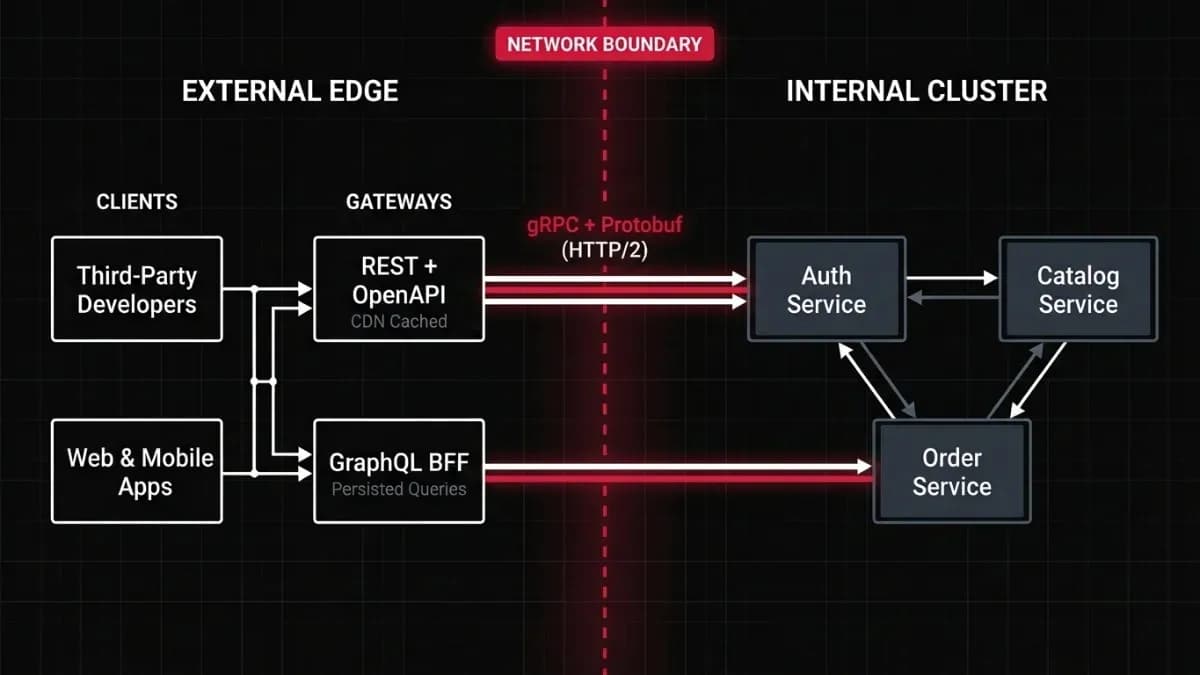
Backend Architecture
REST vs GraphQL vs gRPC: Choosing the Right API Architecture
Each style wins one axis and loses another. How caching, schema change, clients, operations and latency decide it, plus the hybrid most teams end up running.
15 MIN READRead Feature
Discussion (…)