
Latest Dispatch
Cybersecurity6 min readUpdated
CISA Orders Emergency Patches for SonicWall SSL-VPN MFA Bypass Flaw
Attackers are abusing a logic defect in SonicOS SSL-VPN that lets alternate credentials slip past SAML multi-factor authentication.
XSYPHER SECURITY DESK
Technical Intelligence ·
How Alternate Credentials Break SAML Authentication
Perimeter defenses failed again.
SonicWall issued emergency updates after discovering active in-the-wild exploitation targeting a critical logic flaw inside the SonicOS SSL-VPN architecture. Tracked as CVE-2026-19868 with a CVSS severity score ranging from 7.1 to 7.5, the vulnerability allows an attacker possessing valid credentials for an alternate authentication method to subvert Security Assertion Markup Language controls completely. Under vulnerable configurations, the appliance fails to enforce secondary validation challenges, enabling unauthorized sessions even when administrators mandate multi-factor protection.
Security researcher Ryan Harris of The Electronic Office identified the flaw and reported it directly to SonicWall's Product Security Incident Response Team. As confirmed in initial reporting by The Hacker News, the breakdown occurs specifically during authentication handshakes where alternate login paths override established identity provider requirements. The system accepts valid secondary credentials and grants access without requesting mandatory SAML tokens.
The core issue rests in state machine handling. When an incoming login request supplies valid authentication parameters via secondary mechanisms—such as localized database entries or RADIUS backups—SonicOS fails to retain the mandatory SAML enforcement flag. Consequently, session management logic treats the connection as fully authorized. Multi-factor authentication mechanisms tethered directly to identity providers like Entra ID or Okta never trigger. An attacker with compromised legacy or fallback credentials effectively bypasses modern zero-trust policies with surgical precision.
Active Threat Campaigns Force Federal Intervention
Threat actors moved swiftly.
Following confirmation of ongoing exploitation, the U.S. Cybersecurity and Infrastructure Security Agency added CVE-2026-19868 to its Known Exploited Vulnerabilities catalog. As highlighted by analysis from BleepingComputer, federal directives now require Federal Civilian Executive Branch agencies to patch all exposed appliances prior to the strict deadline of November 20, 2026.
SonicWall acknowledged in its November 6 advisory that its internal incident team actively investigated reports detailing potential real-world abuse. While the hardware vendor has not publicly identified the specific threat actors involved or the precise scope of targeting, network defenders report an uptick in automated credential stuffing focused on edge appliances. Additional corroboration from coverage by Cyber Security News indicates that adversary groups are aggressively scanning internet-facing SSL-VPN portals to identify endpoints configured with dual-authentication schemas.
This incident fits into a troubling sequence of hardware gateway compromises. In October, attackers targeted CVE-2026-102255, a maximum-severity flaw affecting SonicWall SMA1000 series appliances. Prior to that campaign, threat groups successfully chained two zero-day vulnerabilities in September to execute arbitrary code across remote access infrastructure. Enterprise edge hardware remains an exceptionally high-value target for ransomware brokers seeking low-friction persistence.
Unauthenticated Control Flaws Compound Perimeter Risk
The single vulnerability represents only part of the defensive challenge.
SonicWall's simultaneous firmware patch bundled resolutions for six additional security flaws residing within SonicOS management and VPN subsystems. Two high-severity vulnerabilities in the management interface—CVE-2026-107155 and CVE-2026-107154—each carry a CVSS score of 8.8. Both bugs allow remote unauthenticated attackers to execute unauthorized administrative operations under specific network conditions, severely expanding the attack surface for exposed administrative consoles.
The maintenance release also remediates CVE-2026-82308, a CVSS 7.5 pre-authentication heap-based buffer overflow inside the SonicOS SSL-VPN service. Unauthenticated remote adversaries can trigger this memory corruption flaw to cause application-level denial-of-service conditions across perimeter devices, effectively dropping corporate remote access tunnels. and, security engineers fixed buffer overflow vulnerabilities within the TACACS+ authentication protocol handler alongside a weak password hashing implementation affecting virtual firewall deployments.
Industry warnings published by reporting from Help Net Security emphasize that these management flaws create severe systemic exposure when paired with authentication bypasses. An attacker who bypasses SAML MFA using alternate credentials can exploit session validation gaps to escalate privileges, dump configuration files, or pivot directly into internal subnet structures.
Engineers Face Immediate Patching Deadlines
Operational workarounds do not exist.
SonicWall explicitly warned enterprise administrators that disabling SAML or modifying authentication rules cannot guarantee full mitigation against CVE-2026-19868. The vendor confirmed that hardware running SonicOS Gen7 versions 7.3.3-7015 and earlier, as well as Gen8 versions 8.2.2-8015 and earlier, must be upgraded immediately to patched releases.
Network security engineers must deploy the following firmware builds across production firewalls without delay:
- SonicOS Gen7 Appliances: Upgrade directly to version 7.3.4-7013 or later.
- SonicOS Gen8 Appliances: Upgrade directly to version 8.2.3-8015 or later.
- Virtual Appliances: Apply updated platform images to rectify weak password hashing vulnerabilities.
The timing compounds ongoing infrastructure migration pressure. SonicWall recently announced it will not issue patches for two unpatched vulnerabilities—CVE-2026-109593 and CVE-2026-109594—impacting legacy, end-of-life Global Management System deployments. Organizations still relying on legacy GMS consoles must transition immediately to Network Security Manager to prevent management compromise.
System administrators must treat perimeter firewalls as actively contested territory. Auditing local fallback accounts, verifying SAML token validation pipelines, and enforcing immediate system upgrades remain the only viable defenses against persistent edge exploitation.
Primary source
The Hacker News (opens in a new tab)Pulse Wire Briefing
Real-time security & systems dispatches, straight to your inbox.
Read Next in Pulse
View All Pulses


Deep Dives from xSypher
View All Deep Dives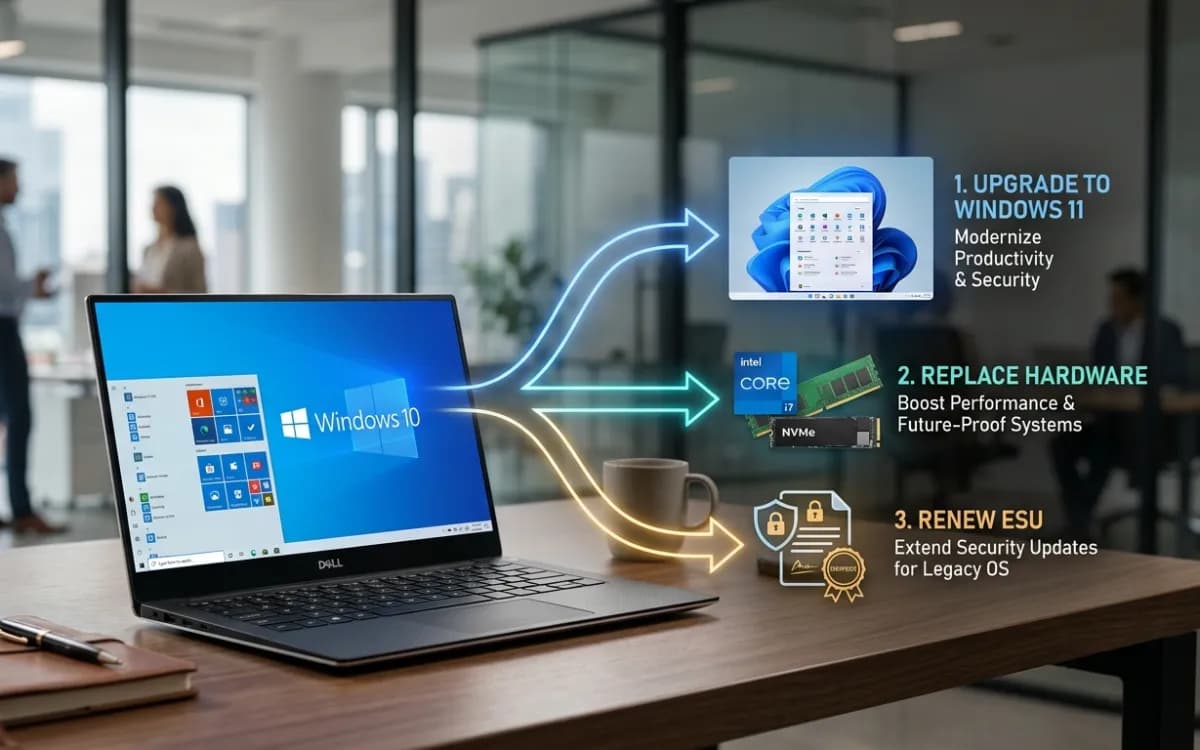
Windows
Windows 10 ESU Year 2: Pay, Upgrade or Replace
A per-seat decision model for mixed estates choosing between $122-per-device renewals, Windows 11 upgrades and hardware replacement.
14 MIN READRead Feature

Large Language Models
Why AI Hallucinates and How to Catch It Before It Costs You
Language models are trained to guess, not to say "I don't know." Here is why they fabricate citations and numbers, plus the validation workflow we use.
15 MIN READRead Feature
Backend Architecture
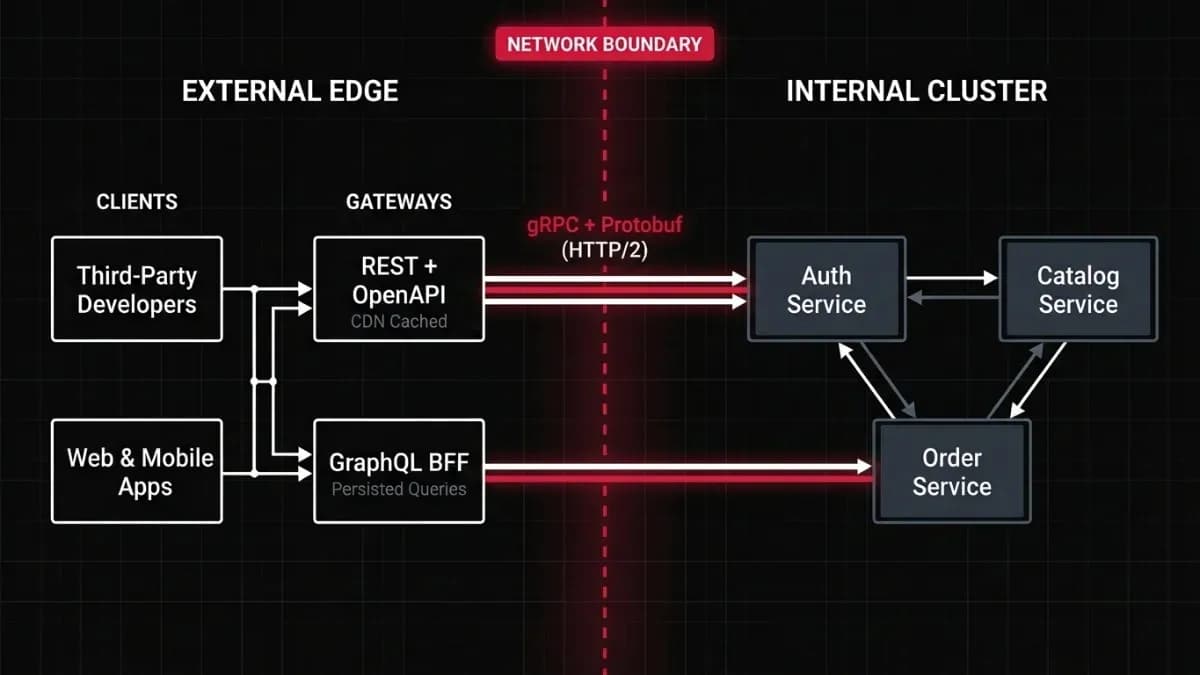
REST vs GraphQL vs gRPC: Choosing the Right API Architecture
Each style wins one axis and loses another. How caching, schema change, clients, operations and latency decide it, plus the hybrid most teams end up running.
15 MIN READRead Feature
Discussion (…)