3 min readRead
The sudden departure of the long-serving executive triggers an immediate leadership transition and a ten percent drop in pre-market stock trading.
NVIDIA announced that Jensen Huang has resigned as president, chief executive officer, and a member of the board effective immediately after leading the business for 33 years, according to a corporate statement issued by the company (NVIDIA). The sudden departure marks a major change for the 33-year-old enterprise (Eurogamer).
The sudden leadership shake-up arrives after Huang admitted in a weekend memo to employees that he had been unfaithful to his wife (GSMArena). Following that internal disclosure, reports cited individuals who worked at the company regarding a second relationship with Kimberly Powell, the corporate vice president of healthcare who reported directly to the chief executive (GSMArena). Huang co-founded the business and directed its operations for 33 years (Eurogamer), making his rapid departure a critical moment for investors, enterprise partners, and developers navigating the hardware and artificial intelligence ecosystem.
The board of directors accepted the resignation immediately following the disclosures (NVIDIA). In his memo sent over the weekend, Huang acknowledged his infidelity (GSMArena). Additional reporting published on Wednesday detailed the second relationship involving Powell (GSMArena). The abrupt nature of the departure bypassed any planned succession timeline, forcing the board to institute emergency leadership adjustments to maintain institutional stability during a period of heavy enterprise demand across global markets.
Colette Kress, the current executive vice president and chief financial officer, agreed to step into the role of interim chief executive officer (NVIDIA). Kress will retain her duties as executive vice president and chief financial officer while managing interim executive responsibilities until a permanent successor is selected (NVIDIA). Since joining the enterprise in September 2013, Kress has managed the finance organization and steered financial evolution during a phase of rapid expansion (NVIDIA). Her prior career includes nearly 25 years holding senior finance positions at major technology entities including Cisco and Microsoft (NVIDIA).
Concurrently, the board appointed Harvey C. Jones as its first-ever chair of the board (NVIDIA). Jones brings a three-decade career as an entrepreneur, active venture investor, and technology executive, which features an explicit tenure serving as chief executive officer and executive chairman of Synopsys (NVIDIA).
The board is initiating a formal search for a permanent chief executive officer and will evaluate both internal and external candidates (NVIDIA). Jones stated that the board holds full confidence in Kress and the broader leadership team (NVIDIA). According to company-reported statements, the board expects ongoing operations, customer commitments, and the active product roadmap to proceed without interruption (NVIDIA). Kress noted her commitment to building upon the operational foundation established over the prior three decades to advance accelerated computing and artificial intelligence initiatives (Eurogamer).
The executive transition occurs just days before scheduled corporate financial disclosures. NVIDIA confirmed it will report its third-quarter fiscal 2027 financial results on Tuesday, November 17 at approximately 1:20 p.m. PT, followed immediately by its earnings call at 2 p.m. PT (NVIDIA).
Financial markets reacted swiftly to the sudden executive departure and ensuing management uncertainty. Company stock dropped about 10% in pre-market trading on Thursday morning (GSMArena).
Primary source
Nvidia Newsroom (opens in a new tab)Pulse Wire Briefing
Real-time security & systems dispatches, straight to your inbox.

A per-seat decision model for mixed estates choosing between $122-per-device renewals, Windows 11 upgrades and hardware replacement.

Language models are trained to guess, not to say "I don't know." Here is why they fabricate citations and numbers, plus the validation workflow we use.
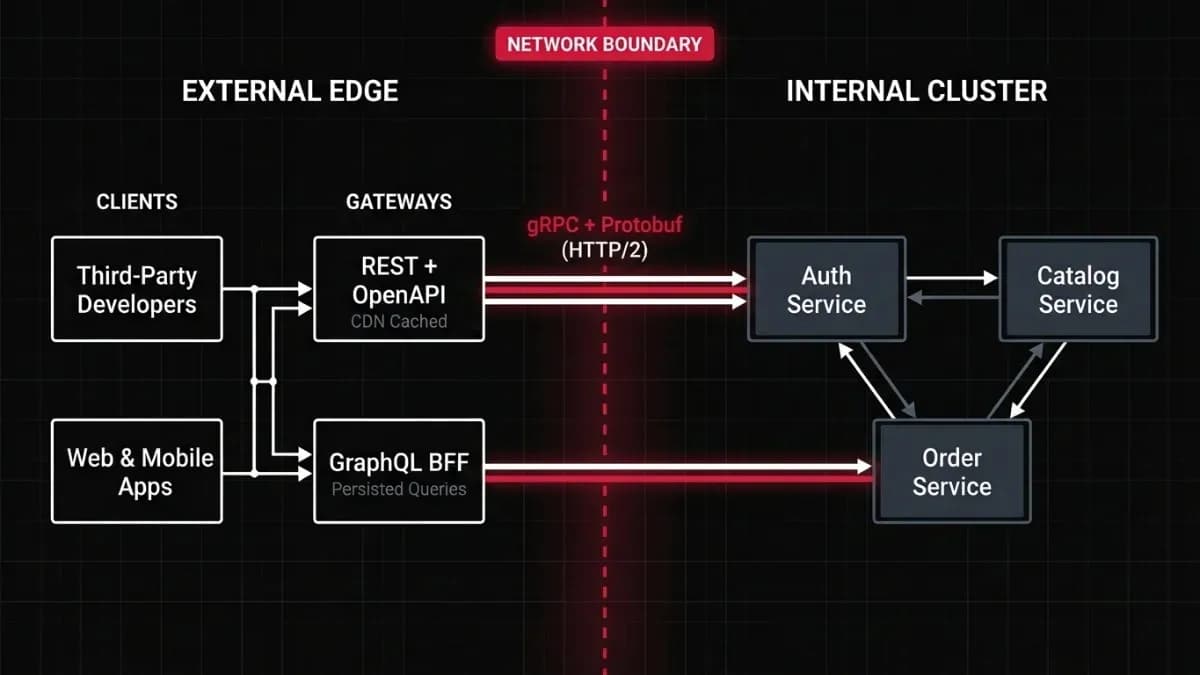
Each style wins one axis and loses another. How caching, schema change, clients, operations and latency decide it, plus the hybrid most teams end up running.



Discussion (…)