
3 min readRead
The drop signals growing investor skepticism toward artificial intelligence offerings, potentially pressuring private valuations and upcoming public listings.
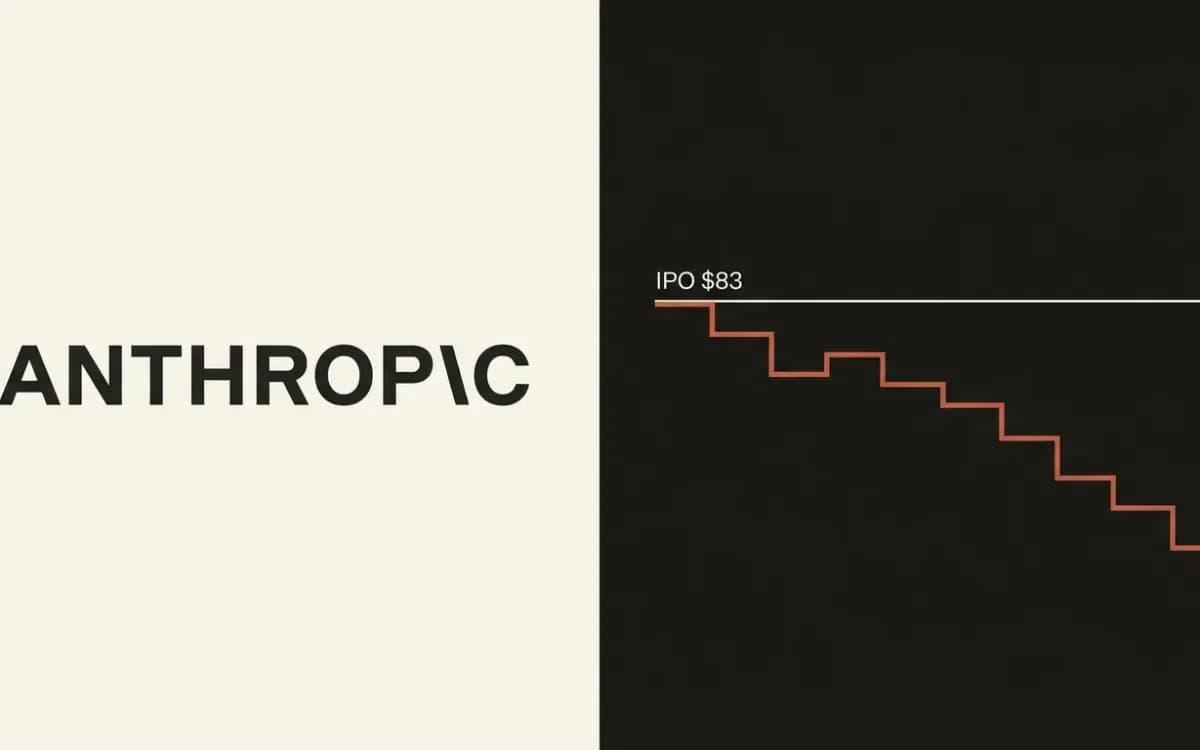
Shares of the frontier AI lab sank as low as $76 intraday Tuesday after underwriters exhausted their greenshoe stabilization buffer and institutional desks rotated back into semiconductor equities.
Anthropic PBC (NASDAQ: ANT) broke below its $83.00 initial public offering price on Tuesday, sliding up to 13% intraday to trade beneath $76.00 before paring losses to close at $81.91. The breach occurred on just the fourth trading day after the San Francisco-based AI developer completed the largest public equity listing in market history, a breakdown that arrived more than four times faster than SpaceX's 21-day post-IPO honeymoon earlier this year.
At Tuesday's intraday trough near $76.00, Anthropic traded 8.4% below its offering price and 34% beneath its Thursday debut peak of $115.10. Tuesday's $81.91 close leaves the public benefit corporation valued at roughly $1.5 trillion, sitting 1.3% underwater for institutional and retail accounts allocated shares in last week's offering.
Unlike typical mega-cap listings where lead bookrunners step in to defend the offering price during early volatility, Anthropic's underwriting syndicate no longer held its primary stabilization buffer by Tuesday morning.
According to Anthropic's IPO Closing Disclosure, joint lead bookrunners Goldman Sachs and Morgan Stanley exercised their full 30-day overallotment option, the "greenshoe," on November 20, purchasing all 147,000,000 additional Class A shares at $83.00 with zero added underwriting commission. Combined with the base offering of 980,000,000 Class A shares (956,351,354 sold by Anthropic and 23,648,646 by selling stockholders), the public float absorbed 1,127,000,000 shares for $93.5 billion in gross IPO proceeds.
Alongside the public float, seven strategic hardware and cloud partners: AMD, Broadcom, Google, Micron, Microsoft, Nvidia, and TSMC, purchased $26.0 billion of unregistered Class N common stock at the $83.00 IPO price, bringing total gross capital mobilized in a single liquidity event to $119.5 billion.
In standard equity capital markets structure, underwriters short the overallotment shares at pricing; if the stock breaks below issue, banks buy shares on the open market to cover that short and establish a price floor. Because Anthropic opened Thursday at $111.50, well above its upgraded $83.00 pricing and initial $70.00-to-$78.00 roadshow range, the syndicate immediately exercised the greenshoe in full, eliminating open-market buyback support once selling pressure accelerated this week.
Beneath short-term supply mechanics, institutional desks are repricing Anthropic's balance sheet commitments disclosed in its SEC Form S-1/A Registration Statement and final SEC Form 424(b)(4) Prospectus.
The filings show hyper-growth paired with unprecedented capital intensity:
Top-line velocity. Nine-month 2026 revenue reached $33.24 billion, surging more than 1,200% year-over-year, driven by $16.96 billion in third-quarter enterprise API and Claude workspace sales alone.
Accounting vs. operating burn. While GAAP net losses hit $104.0 billion over the first nine months of 2026, $94.3 billion stemmed from non-cash fair-value remeasurements on convertible notes, SAFEs, and partner financing liabilities triggered by Anthropic's rising valuation. Core GAAP operating losses stood at $1.3 billion over the nine-month stretch, while non-GAAP adjusted operating income reached $4.1 billion (a 12% margin).
Long-term compute overhang. Across multi-year cloud and silicon contracts, Anthropic carries roughly $900.9 billion in total compute commitments, including $70.7 billion payable over the next 12 months, nearly consuming the $91.6 billion in gross primary IPO proceeds retained by the company before fees.
That $119.5 billion capital raise has also acted as a liquidity vacuum across public tech portfolios, forcing institutional funds to trim existing software and AI holdings to fund their ANT allocations.
Anthropic's slide diverged sharply from the rest of the AI complex at the start of the week. On Monday, November 23, Nvidia shares surged 31% after its board reinstated co-founder Jensen Huang as chief executive officer, sparking the sharpest single-day rebound in the Nasdaq 100 since April 2025. Anthropic bucked that rally, slipping 1.4% on Monday as macro funds rotated out of newly listed model-layer equity and back into semiconductor infrastructure. When Nvidia cooled by more than 5% on Tuesday, high-multiple AI names absorbed broad de-risking.
Derivatives flow reflects deep institutional division around the $80.00 handle. By midday Tuesday, nearly 500,000 ANT options contracts had changed hands for roughly $250 million in premium, making Anthropic the sixth-most active single-stock options market on U.S. exchanges, as implied volatility spiked to 96.
Put volume outpaced calls by roughly 300,000 to 200,000 contracts, anchored by an aggressive $7.5 million sweep of nearly 11,000 mid-December $75-strike puts bought above the ask at $6.85 per contract, pricing in another 11% downside. Counterbalancing that hedge, institutional sellers wrote nearly a dozen blocks of in-the-money December 18 $120-strike puts at $40.00 in premium, a synthetic long structure that sets an effective institutional entry breakeven right at $80.00 per share.
For late-stage private AI labs still waiting in the IPO pipeline, Anthropic's rapid drop below its $83.00 issue price resets valuation multiples, and impacts public backers like Alphabet, which holds just under 30% of Anthropic's equity and marks those holdings to market on quarterly earnings statements.
Primary source
Hacker News Trending (opens in a new tab)Pulse Wire Briefing
Real-time security & systems dispatches, straight to your inbox.
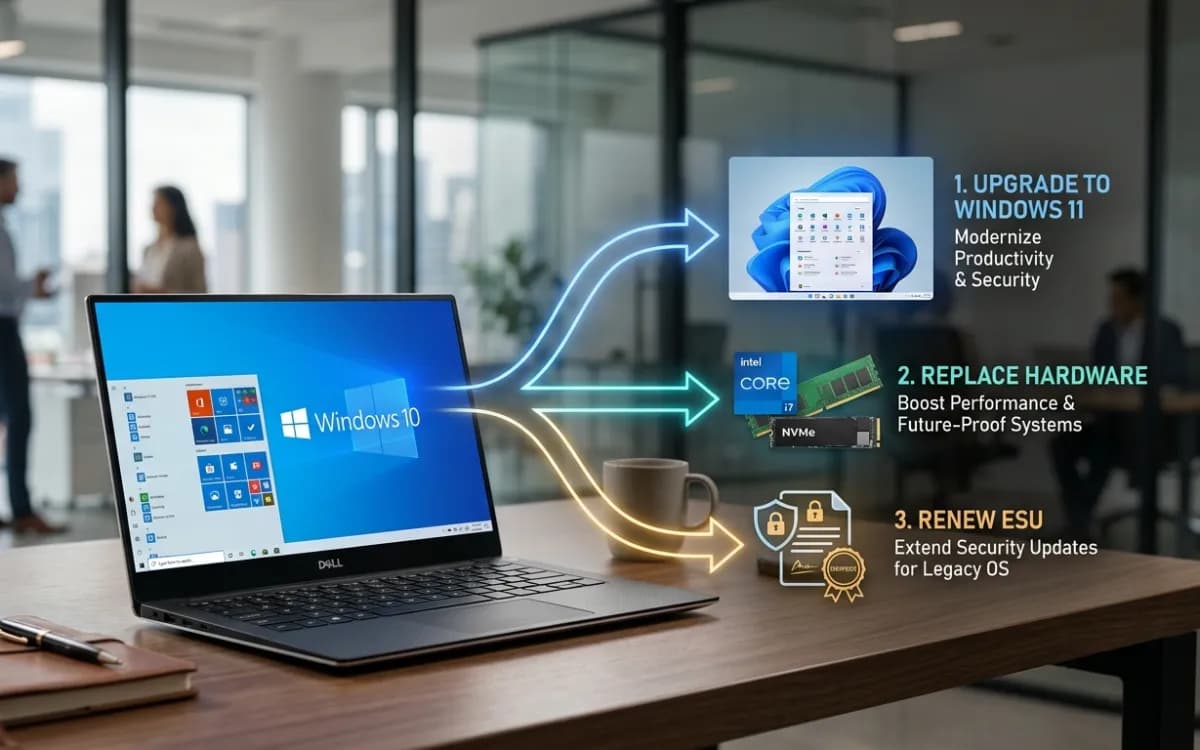
A per-seat decision model for mixed estates choosing between $122-per-device renewals, Windows 11 upgrades and hardware replacement.

Language models are trained to guess, not to say "I don't know." Here is why they fabricate citations and numbers, plus the validation workflow we use.
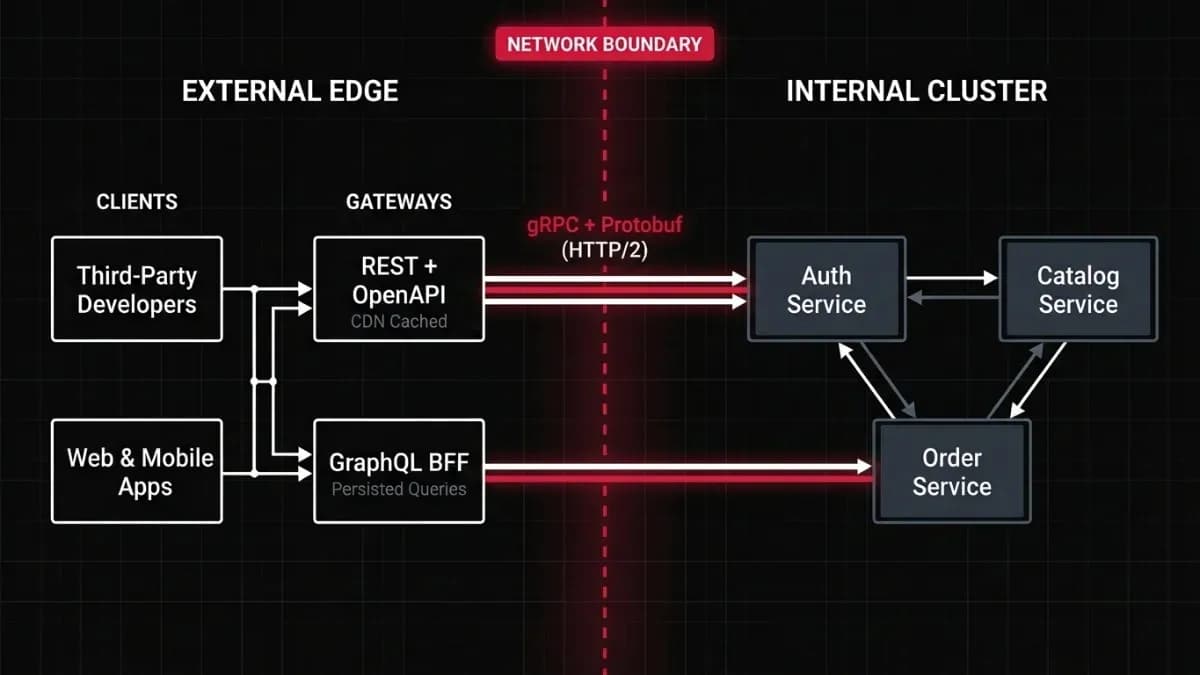
Each style wins one axis and loses another. How caching, schema change, clients, operations and latency decide it, plus the hybrid most teams end up running.



Discussion (…)