

2 min readRead
The streaming service becomes the first platform to enact a full ban on AI tracks, shifting enforcement rules after previously requiring content labels and demonetizing synthetic songs.

The Block-owned streamer becomes the first major on-demand music platform to purge fully synthetic songs after AI uploads hit 60% of daily deliveries.
Tidal will ban and delete all wholly AI-generated music from its catalog starting December 9, abandoning an earlier effort to contain synthetic audio through labels and royalty demonetization, according to a Variety report. The purge will strip roughly 29 million tracks from the service by the start of 2027 and block an estimated 80,000 to 85,000 new submissions every day.
While indie storefront Bandcamp outlawed synthetic music in January, Tidal is the first major on-demand digital service provider (DSP) to enact an outright catalog ban.
Five months ago, Tidal rolled out a containment policy that slapped an AI badge on 100% machine-generated recordings, stripped them from its royalty pool, and barred deceptive artist impersonations. The financial deterrent failed to slow automated upload pipelines.
In an X thread on Tuesday, Robert Andersen, Tidal's lead at parent company Block, revealed that 43% of all tracks delivered to the platform over the past 90 days were flagged as wholly AI-generated. On November 6 alone, synthetic songs accounted for more than 60% of Tidal's total daily ingestion, as detailed in The Hollywood Reporter.
"Something more drastic needs to be done," Andersen wrote, calling on rival streaming services to adopt the same ban.
Internal platform telemetry shared alongside the announcement exposes a stark gap between upload volume and listener demand:
Catalog footprint. Roughly 27 million tracks, about 6.3% of Tidal's active library, currently carry an AI badge, according to Ars Technica.
Generator concentration. Around 94% of all AI-badged tracks on the platform originate from a single generative music model, Suno.
Zero listener engagement. Fully 96% of AI-tagged tracks recorded zero streams over the past three months.
Impersonation takedowns. Automated moderation has already pulled approximately 66,000 AI tracks flagged for hijacking real artists' names to siphon royalties.
Tidal noted that while independent human musicians naturally need time to find an audience, industrial-scale synthetic uploads actively bury legitimate releases and degrade music discovery for paying subscribers.
Rather than relying on honor-system disclosures, Tidal is enforcing the ban at both the distributor gateway and the audio-scanning layer. Distributors are now prohibited from delivering 100% AI-generated recordings, and Tidal's ingestion pipeline will automatically reject any package whose metadata indicates generative tools produced the sole output.
For unlabeled uploads, Tidal scans incoming audio using detection technology built by French audio-intelligence firm Ircam Amplify, as noted in The Defiant's coverage.
The policy draws a strict line between end-to-end prompt generation and studio production tools. Tracks created with partial AI assistance remain allowed on the service as long as human musicianship shapes the recording. Tidal's support documentation notes that enforcement targets only 100% synthetic outputs to reduce false-positive risks on hybrid workflows, and the company maintains an appeal form for human artists whose recordings are mistakenly flagged.
Tidal's zero-tolerance cutoff breaks sharply from the labeling-and-filtering strategy favored by larger competitors, as outlined in The Verge's report.
Spotify still accepts fully synthetic uploads, though it purged 75 million spam tracks from its catalog, stripped another 50 million slop tracks from algorithmic recommendations this year, and introduced "AI Persona" disclosures alongside artist-level impersonation blocks. Apple Music and YouTube Music have similarly leaned on disclosure tags rather than catalog removals, while Deezer is rolling out a listener toggle to mute AI tracks from feeds, per TechCrunch.
Pressure from major rights holders is also mounting. On an October earnings call, Universal Music Group CEO Lucian Grainge urged streaming platforms to slash payouts for synthetic audio, arguing that removing the profit motive is the only way to stop industrial-scale content farms from diluting human royalty pools. By cutting synthetic tracks out at the distributor level starting December 9, Tidal removes both the royalty drain and the catalog clutter in a single sweep.
Primary source
Hacker News Trending (opens in a new tab)Pulse Wire Briefing
Real-time security & systems dispatches, straight to your inbox.




A per-seat decision model for mixed estates choosing between $122-per-device renewals, Windows 11 upgrades and hardware replacement.

Language models are trained to guess, not to say "I don't know." Here is why they fabricate citations and numbers, plus the validation workflow we use.
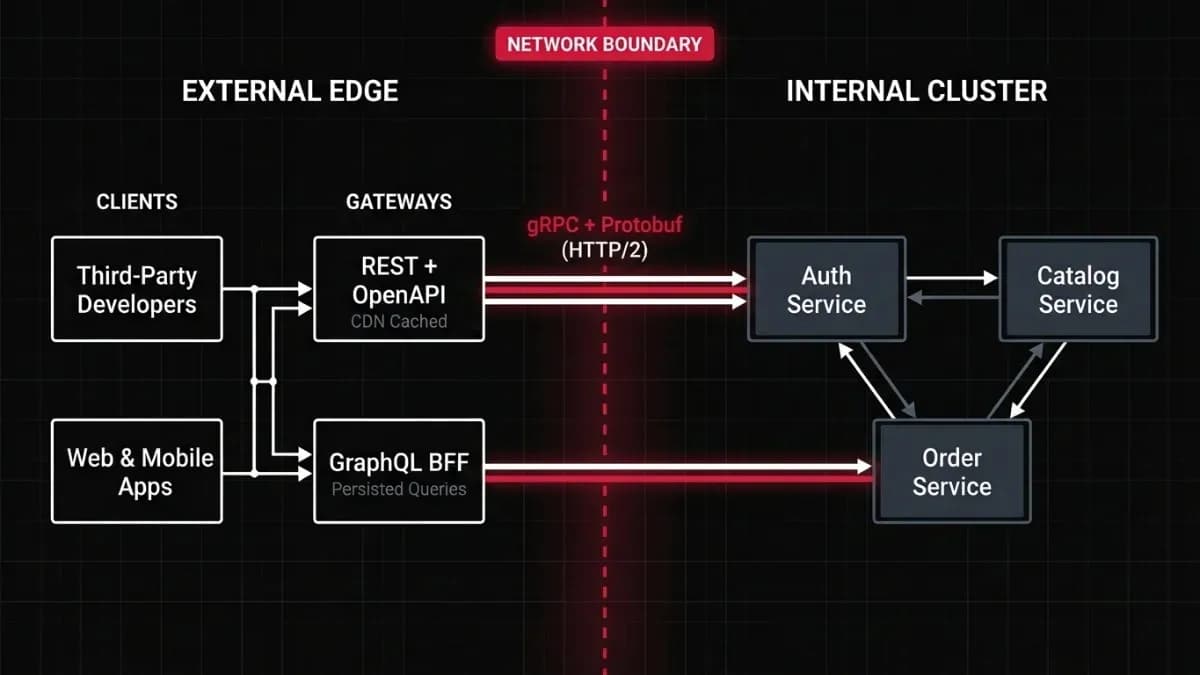
Each style wins one axis and loses another. How caching, schema change, clients, operations and latency decide it, plus the hybrid most teams end up running.
Discussion (…)