
Latest Dispatch
AI2 min readUpdated
Google releases Gemini 4 Hydrogen on Antigravity with new thinking levels
The model achieves 57% on Terminal-Bench 4.1 and ranks fifth on Agent Arena while lowering token consumption across workflows.
XSYPHER AI DESK
Technical Intelligence ·
Google released Gemini 4 Hydrogen inside Google Antigravity, achieving a score of 57% on Terminal-Bench 4.1. The system functions as a standalone model designed for daily coding tasks and complex agentic workflows. Developers can access the platform to handle iterative repository coding, debugging sessions, and automated testing procedures without relying on older flash architectures.
When selecting Hydrogen directly, users can dial reasoning depth across four thinking levels consisting of low, medium, high, and xhigh. The high tier operates as the default setting for most standard tasks. These progressive levels let engineering teams explicitly trade off compute time against output quality and token expense.
Performance and Speed Benchmarks
Company-reported benchmarks indicate that Hydrogen finishes tasks 2.5 times faster than Gemini 3.8 Flash when operating at its default high setting. Vendor figures state that the architecture cuts fabricated claims by more than 5x. The system also adapts cleanly when a tool call fails or a search returns empty results during execution.
On the Artificial Analysis Intelligence Index, Hydrogen achieves a score of 51 points under standard operating parameters. When adjusted to its highest thinking setting, the evaluation score climbs to 54 points. This performance exceeds the 50 points recorded by the Argon model in comparable industry evaluations.
Agentic and Domain Reasoning
For open-ended agentic execution covering deep research, data analysis, and broad codebase navigation, Hydrogen ranks fifth on the live Agent Arena benchmark. In deep domain reasoning evaluations, the model leads its class on HLE-Diamond by registering a score of 58.8%. These results position the architecture strongly for complex analytical workloads.
The model secures the top position overall on Vals Tax Agent Bench with a 52.3% score. It ties for first place on Vals Legal Research Bench at 55.8% and leads its class on AutomationBench-AA. These specialized domain scores reflect robust capabilities in structured legal, financial, and tax data processing tasks.
Multimodal Handling and Context Window
According to vendor measurements on graphs, SQL queries, and data-heavy enterprise workflows, Hydrogen reduces token usage by 12% to 23% compared to Gemini 3.8 Flash. The system pairs a native 1 million-token input capacity with up to 1 million output tokens. This large context window enables the synthesis of dense PDFs, spreadsheets, charts, audio recordings, and video files.
Enterprise deployments involving live UI prototyping, design-to-code iteration, and interactive app building benefit from these architectural enhancements. Hydrogen generates more functional and feature-complete layouts in fewer prompts compared to previous iterations. Organizations migrating from older models will find distinct operational shifts across these benchmarks.
Google Antigravity provides access to Gemini 4 Hydrogen. Additional geographic availability and deployment details are managed through the platform.
Primary source
Hacker News Trending (opens in a new tab)Pulse Wire Briefing
Real-time security & systems dispatches, straight to your inbox.
Read Next in Pulse
View All Pulses


Deep Dives from xSypher
View All Deep Dives
Windows
Windows 10 ESU Year 2: Pay, Upgrade or Replace
A per-seat decision model for mixed estates choosing between $122-per-device renewals, Windows 11 upgrades and hardware replacement.
14 MIN READRead Feature

Large Language Models
Why AI Hallucinates and How to Catch It Before It Costs You
Language models are trained to guess, not to say "I don't know." Here is why they fabricate citations and numbers, plus the validation workflow we use.
15 MIN READRead Feature
Backend Architecture
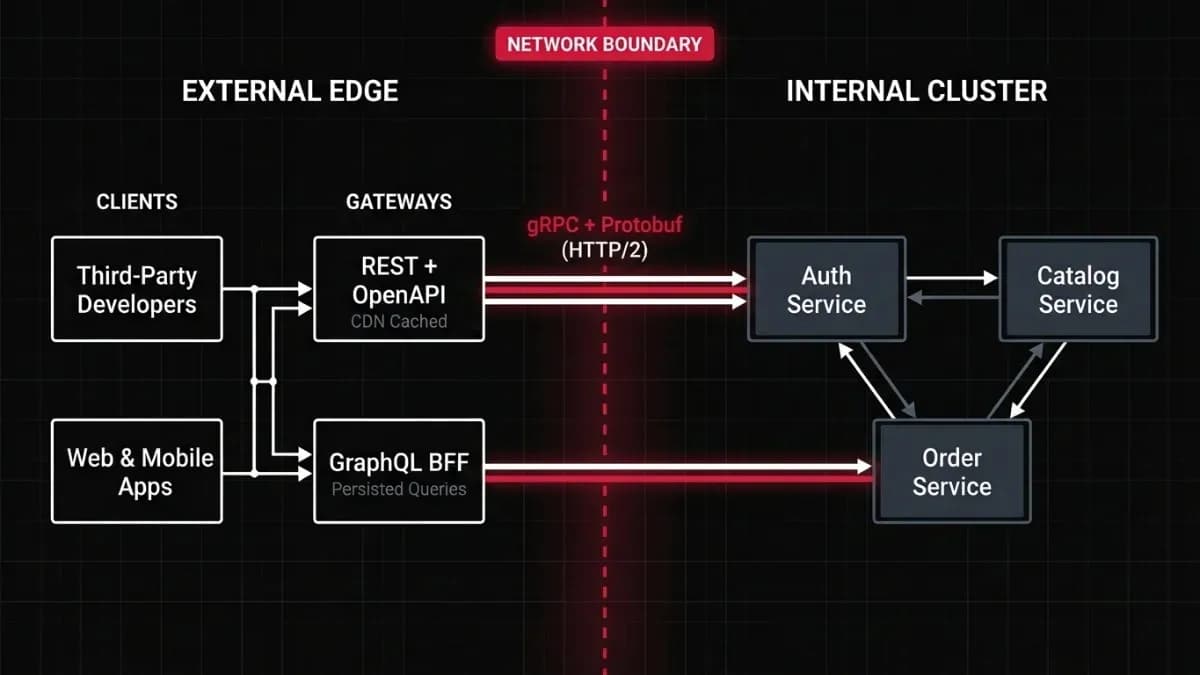
REST vs GraphQL vs gRPC: Choosing the Right API Architecture
Each style wins one axis and loses another. How caching, schema change, clients, operations and latency decide it, plus the hybrid most teams end up running.
15 MIN READRead Feature
Discussion (…)