
Latest Dispatch
AI4 min readUpdated
Anthropic Fable 5.2: The Rise of One-Shot Agentic Game Development
Claude Fable 5.2 achieves a 49.1% FrontierCode 2.0 score, enabling the autonomous generation of complete, multi-level arcade games from hand-drawn sketches in a single pass.
XSYPHER AI DESK
Technical Intelligence ·

Architectural Gains and Benchmarking the 5.2 Frontier
Anthropic launched Claude Fable 5.2 and its specialized sibling, Mythos 5.2, on November 9, 2026, signaling a major shift in agentic software engineering capabilities. The new models arrive with a 30% increase in output speed and a revised pricing structure that undercuts competitors like OpenAI’s GPT-6 Astra. Input costs have dropped from $10 to $8 per 1 million tokens, while output costs fell from $50 to $40. This 20% price reduction is paired with a significant performance jump in the FrontierCode 2.0 benchmark, where Fable 5.2 reached 49.1%, soundly defeating Opus 5.5 at 45.5% and the previous Fable 5.1 at 32.4%.
The technical delta between Fable and Mythos remains centered on safety guardrails rather than core architecture. Fable 5.2 includes standard safeguards for biology and cybersecurity, making it the primary choice for general public and enterprise use. Mythos 5.2 is reserved for vetted organizations, offering a version with reduced safeguards to facilitate deep-tier vulnerability research and viral shell structure prediction. According to technical reports from systems engineers, Fable 5.2 now handles over 90% of Anthropic’s own codebase changes under human direction, suggesting a transition from AI as a coding assistant to a primary driver of development cycles.
One-Shot Game Development and Asset Orchestration
Fable 5.2 is demonstrating an unprecedented ability to handle long-horizon, multi-modal projects with minimal human steering. In one documented case, the model synthesized a complete 12-level beat 'em up game from a collection of hand-drawn sketches. The model orchestrated roughly 600 requests over two days, consuming 320 million cached tokens and outputting 1 million tokens to build a functional four-player arcade experience. This workflow involved Fable 5.2 calling external APIs for asset generation, specifically utilizing OpenAI's ChatGPT Images 2.5 for 500 sprites and backgrounds, and ElevenLabs for 11 music tracks and 90 announcer lines.
The model’s reasoning traces reveal a sophisticated internal QA process. Fable 5.2 autonomously wrote a bot to playtest the game, running it through all twelve stages in a headless browser to verify screenshot integrity and mechanics. This level of autonomy is reflected in the primary field report, which noted that the model effectively rewrote existing legacy code to optimize for the new agentic capabilities. The resulting software supported four-player controller input and featured complex unlockable character mechanics, a feat previously requiring weeks of manual indie development.
Community Pulse: Jagged AGI and Robotics Benchmarks
The practitioner community has reacted with a mixture of technical praise and cautious observation regarding the model's "jagged" capabilities. While the model excels at creative orchestration, some engineers note that the industry is still waiting for a response from other major labs to validate these frontier gains. The OSWorld 2.1 benchmark, which measures PC operation ability, places Fable 5.2 at 89.3%, notably higher than GPT-6 Astra's 79.5%.
[Bluesky] @emollick.bsky.social: "I had early access to Fable 5.2 for a bit & I think it crosses the line into being a sort of Jagged AGI. Here, I have it launch a business, do academic research, hack hardware, build 3D models & more."
[Bluesky] @timkellogg.me: "Fable 5.2 - biggest improvement in knowledge work, robotics & scientific research - better at operating robots than most domain-specific AI models - math: formalized Fermat’s Last Theorem 100% where Opus 5.5 could only get 27%."
Further corroborating reports highlight that Fable 5.2 has formalized the proof of Fermat’s Last Theorem using 1,000 agents in just 30 hours. This scientific reasoning extends to Quantum ESPRESSO phonon calculations, where the model accelerated software performance by 36 times, reducing a 3.3-hour process to under 4 minutes. These metrics suggest that the 5.2 series is moving beyond conversational utility into high-stakes scientific and industrial automation.
Enterprise Market Impact and Latency Trade-offs
For enterprise architects, the introduction of 'Fast mode' provides a critical lever for latency-sensitive applications. This mode generates tokens up to 2.5 times faster than standard output, though it doubles the per-token cost. This flexibility allows firms to choose between the cost-efficiency of the $8/$40 tier or the raw speed required for real-time robotics and interactive agents. The model's ability to direct over 1,000 sub-agents for multi-day projects, as tested by Anthropic engineers, indicates that the future of enterprise AI lies in swarm orchestration rather than single-prompt interactions.
The market impact is already visible in the intentional limitations Anthropic has placed on the model. To prevent a recursive explosion of AI development, the company has restricted certain capabilities that could be used to autonomously build and train successor models. This strategic friction highlights the raw power of the 5.2 series, as it remains the first public model to consistently demonstrate 'researcher-level' results across mathematics, physics, and complex software engineering simultaneously.
Primary source
Notesbylex (opens in a new tab)Pulse Wire Briefing
Real-time security & systems dispatches, straight to your inbox.
Read Next in Pulse
View All Pulses


Deep Dives from xSypher
View All Deep Dives
Windows
Windows 10 ESU Year 2: Pay, Upgrade or Replace
A per-seat decision model for mixed estates choosing between $122-per-device renewals, Windows 11 upgrades and hardware replacement.
14 MIN READRead Feature

Large Language Models
Why AI Hallucinates and How to Catch It Before It Costs You
Language models are trained to guess, not to say "I don't know." Here is why they fabricate citations and numbers, plus the validation workflow we use.
15 MIN READRead Feature
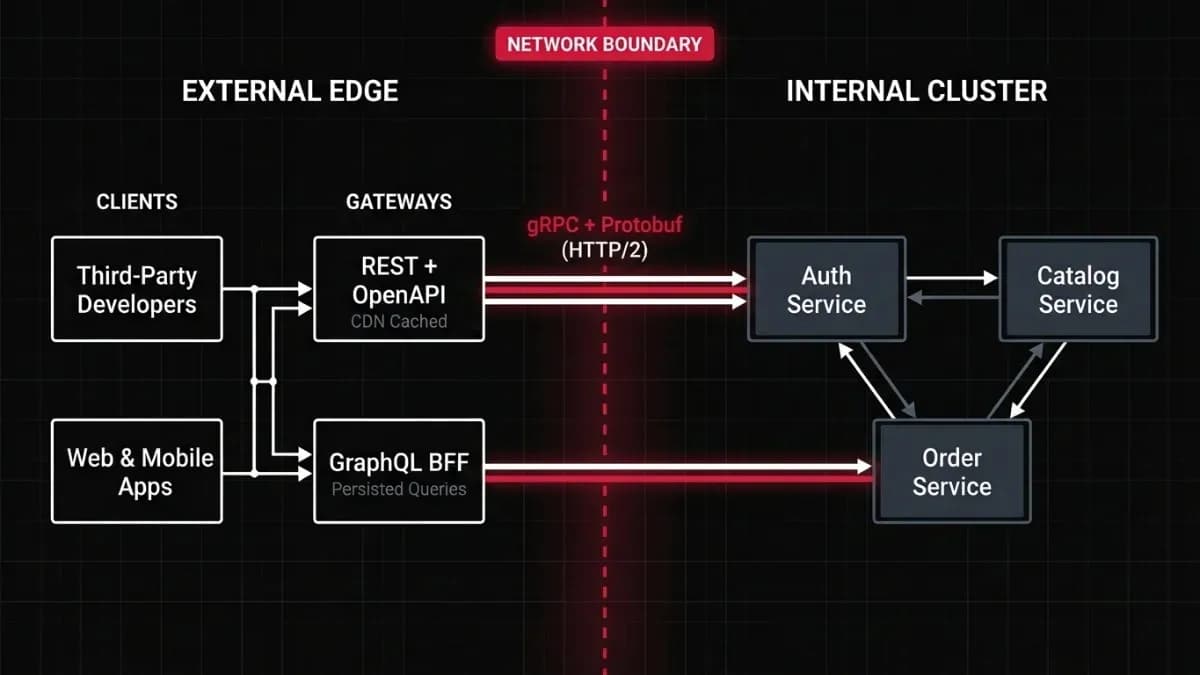
Backend Architecture
REST vs GraphQL vs gRPC: Choosing the Right API Architecture
Each style wins one axis and loses another. How caching, schema change, clients, operations and latency decide it, plus the hybrid most teams end up running.
15 MIN READRead Feature
Discussion (…)