
Latest Dispatch
AI4 min readUpdated
Blender 5.3 Integrates Native Gaussian Splatting and Vulkan Defaults
Blender 5.3 introduces native Gaussian Splatting support, Vulkan as the default API for Linux and Windows, and significant GPU-accelerated compositor performance gains.
XSYPHER AI DESK
Technical Intelligence ·
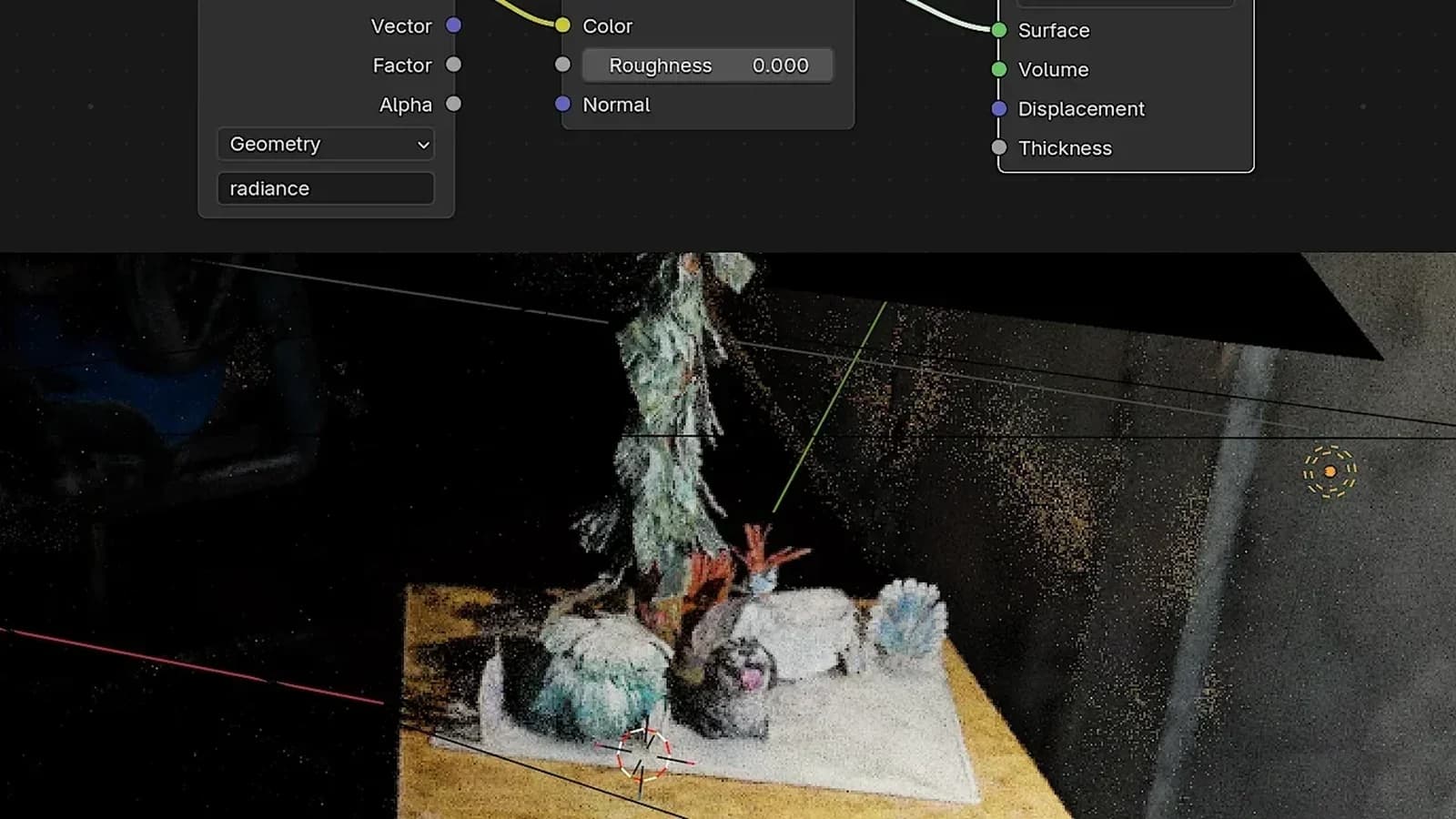
Architectural Shift: Vulkan and Gaussian Volumetrics
Vulkan API is now the default backend for both Linux and Windows environments in Blender 5.3, establishing a new baseline for open-source 3D pipelines. This transition allows the software to bypass legacy driver bottlenecks, facilitating more direct communication with modern GPU hardware. The most significant architectural addition is native support for Gaussian Splatting (3DGS), a technique that utilizes point clouds to simulate volumes and surfaces with photorealistic accuracy. Unlike traditional polygonal meshes, Gaussian Splatting enables the manipulation of color, transparency, and density at a granular level, making it effective for rendering complex environmental effects like smoke, fog, and real-world captures without the computational weight of high-density geometry.
Integration extends into the EEVEE and Cycles engines, where NVIDIA DLSS denoising now provides near-final render quality directly within the viewport. This requires NVIDIA driver version 620 or newer and aims to eliminate flickering during animation playback. For technical artists, the Compositor has been overhauled to support an effects stack similar to modifiers, allowing for non-destructive application of Bloom, Chromatic Aberration, and Film Grain. Performance benchmarks indicate that playback is now up to 2x faster on GPUs for EXR sequences, while the Anisotropic Kuwahara filter sees a 30% performance gain on CPUs and up to 10x on Apple Silicon.
Pipeline Ergonomics and Project Management
Per-project asset libraries and color management configurations are now available via a formal Projects system, addressing a long-standing limitation in Blender’s file management. Previously, user preferences were shared globally, often leading to configuration drift across different productions. This system enables teams to define specific file paths or custom variables that persist across the project environment. While the system remains optional, it provides the foundation for upcoming per-project extensions and add-ons, aligning Blender more closely with enterprise-grade DCC (Digital Content Creation) tools.
The Video Sequencer (VSE) update includes a new ripple editing framework that allows for automatic timeline adjustments, where moving or trimming strips shifts subsequent content to maintain continuity. This is complemented by the inclusion of initial OpenTimelineIO support, facilitating the exchange of editorial data between Blender and other industry-standard software. The VSE now features a rewritten Blade tool with real-time frame previews and hardware-accelerated decoding, targeting fluid performance for high-resolution video manipulation.
Community Pulse: Gaussian Hype and Performance Realities
Practitioners highlight that community consensus remains observational pending broader benchmark verifications, though the 3DGS implementation has generated significant technical interest. On Hacker News, practitioner hermitShell observed that the industry is "converging on text specification to 3D world" and argued that Gaussian Splat technology "doesn't get as much hype as it deserves," suggesting it may be a critical application for spatial computing. Conversely, some users expressed concerns regarding the visual artifacts inherent in point-cloud rendering, with PyWoody noting that certain high-motion 3DGS captures can induce nausea if not properly stabilized.
"Blender 5.3 is out! Gaussian splats and DLSS denoising... ripple editing in the VSE, a Compositor effects stack, the new Projects system, and more!" — @blender.org
On Reddit, the sentiment focused on the accelerating pace of AI-driven graphics, with user u/fugogugo stating that the "speed of AI race is something that normal human can't catch up anymore." This reflects a broader industry trend where traditional rendering techniques are being augmented by neural radiance fields and splatting. Developers on platforms like Phoronix have highlighted the Vulkan transition as a stability milestone for Linux users, ensuring that the open-source community remains at parity with proprietary Windows-based workflows.
Refining the Developer Experience
UI support for basic Markdown formatting is now active, which is particularly useful in the new Comment node for documenting complex node trees. This is paired with a searchable sidebar across all editors, allowing users to locate specific properties or operators within deeply nested add-on tabs. For Grease Pencil users, the new Carver tool utilizes Boolean subtraction to create clean cuts in strokes and fills, while the Fill tool can now bridge multiple regions in a single path. These refinements represent a concerted effort to improve the daily ergonomics of the software for power users and pipeline integrators without introducing critical architectural blockers.
Primary source
Blender (opens in a new tab)Pulse Wire Briefing
Real-time security & systems dispatches, straight to your inbox.
Read Next in Pulse
View All Pulses


Deep Dives from xSypher
View All Deep Dives
Windows
Windows 10 ESU Year 2: Pay, Upgrade or Replace
A per-seat decision model for mixed estates choosing between $122-per-device renewals, Windows 11 upgrades and hardware replacement.
14 MIN READRead Feature
Large Language Models
Why AI Hallucinates and How to Catch It Before It Costs You
Language models are trained to guess, not to say "I don't know." Here is why they fabricate citations and numbers, plus the validation workflow we use.
15 MIN READRead Feature
Backend Architecture
REST vs GraphQL vs gRPC: Choosing the Right API Architecture
Each style wins one axis and loses another. How caching, schema change, clients, operations and latency decide it, plus the hybrid most teams end up running.
15 MIN READRead Feature
Discussion (…)