
Latest Dispatch
AI3 min readUpdated
Claude Fable 5.2 Hits 65 on Intelligence Index Amid Anthropic IPO Preparations
Anthropic releases Claude Fable 5.2 and Mythos 5.2, achieving record intelligence scores while balancing high inference costs and improved processing speeds.
XSYPHER AI DESK
Technical Intelligence ·

Architectural Benchmarks and Intelligence Index Performance
Claude Fable 5.2 has secured a score of 65 on the Artificial Analysis Intelligence Index, establishing a new performance ceiling for frontier reasoning systems. This metric places the model significantly ahead of the industry median score of 40. While the intelligence gains are measurable, the architectural trade-offs manifest in extreme verbosity and latency. During standardized testing, Fable 5.2 generated 275M tokens, nearly four times the median of 72.8M tokens observed in its peer class. This verbosity contributes to an average task completion time of 44.1 minutes, a stark contrast to the 12.9-minute median for other high-tier models.
Anthropic engineered Fable 5.2 to handle complex, open-ended technical work that exceeds the capabilities of the everyday-tuned Claude Opus 5.5. The model supports a 1M token context window, roughly equivalent to 1,500 pages of dense text, and accepts both text and image inputs. According to Dianne Penn, Anthropic’s product management lead for research, these frontier models target the most challenging domains in robotics, mathematics, and scientific research. Internal testing suggests the model can formalize Fermat’s Last Theorem with 100% accuracy, whereas previous iterations like Opus 5.5 reached only 27%.
The Economics of Frontier Inference and IPO Strategy
Input tokens for Fable 5.2 are priced at $8.00 per million, while output tokens cost $40.00 per million, reflecting a 20% reduction from the previous 5.1 series. These figures sit well above the industry medians of $2.00 for input and $10.00 for output. On average, evaluating a single task on the Intelligence Index costs $26.54 with Fable 5.2. This high cost-to-serve is a factor for enterprise architects calculating the ROI of deploying such high-parameter reasoning engines at scale.
This release arrives as Anthropic prepares for a potential IPO, with an amended prospectus revealing revenue of $33.24 billion for the nine months ending September 30. This represents a 200% increase compared to the previous year. The company is reportedly targeting a valuation between $1 trillion and $1.5 trillion. The dual release of Fable 5.2 for general availability and Mythos 5.2 for vetted organizations allows Anthropic to demonstrate product velocity while addressing safety concerns. Mythos 5.2 includes advanced cybersecurity capabilities that are restricted to participants in the company’s Life Sciences and Cyber Verification Programs.
Community Pulse: Engineering Reception and Practical Utility
Practitioners on platforms like Hacker News and Bluesky have noted that while the reasoning capabilities are unmatched, the high latency requires specific prompt engineering strategies to manage costs effectively. There is also discourse regarding the model's ability to coordinate complex autonomous tasks without human intervention. Engineers caution that Google has not shipped a model recently capable of competing with the Fable series in these specific benchmarks.
[Hacker News] unshavedyak: "I assume because Opus 5.5 was a huge improvement over 5.0. Fable still talks a fair bit like Opus 5.0 for me, so i'd quite enjoy a Fable equivalent to 5.5. Ie i'm quite interested in Fable 5.5. Curious to see how 5.2 measures up in producing readable output."
On Bluesky, technical users have highlighted the model's proficiency in scientific research, noting its performance in operating robots compared to domain-specific AI models. However, the cost remains a friction point. As noted in Tech reports, the ability to design physical objects and build complex software comes with significant billing implications. Some engineers, such as bananaflag on Hacker News, suggest that Fable 5.2 may be a transitional release, stating, "Probably they have a more impressive model in preparation, and they're gonna dub that Fable 5.5." For now, the 30% speed improvement over Fable 5.1 provides some relief for production pipelines, even if it still lags behind the broader market's median latency.
Primary source
Artificialanalysis (opens in a new tab)Pulse Wire Briefing
Real-time security & systems dispatches, straight to your inbox.
Read Next in Pulse
View All Pulses


Deep Dives from xSypher
View All Deep Dives
Windows
Windows 10 ESU Year 2: Pay, Upgrade or Replace
A per-seat decision model for mixed estates choosing between $122-per-device renewals, Windows 11 upgrades and hardware replacement.
14 MIN READRead Feature

Large Language Models
Why AI Hallucinates and How to Catch It Before It Costs You
Language models are trained to guess, not to say "I don't know." Here is why they fabricate citations and numbers, plus the validation workflow we use.
15 MIN READRead Feature
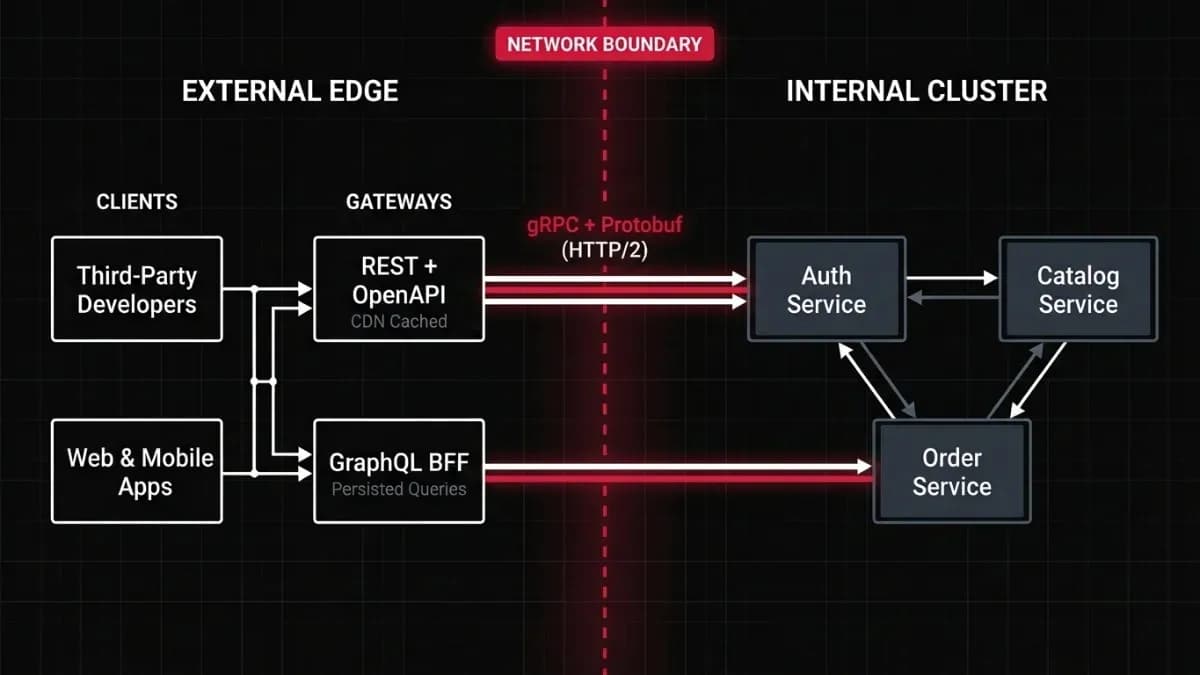
Backend Architecture
REST vs GraphQL vs gRPC: Choosing the Right API Architecture
Each style wins one axis and loses another. How caching, schema change, clients, operations and latency decide it, plus the hybrid most teams end up running.
15 MIN READRead Feature
Discussion (…)