
2 min readRead
Defense contractor Anduril reveals an uncooled long-wave infrared payload designed to track stealth orbital maneuvers in Earths shadow.
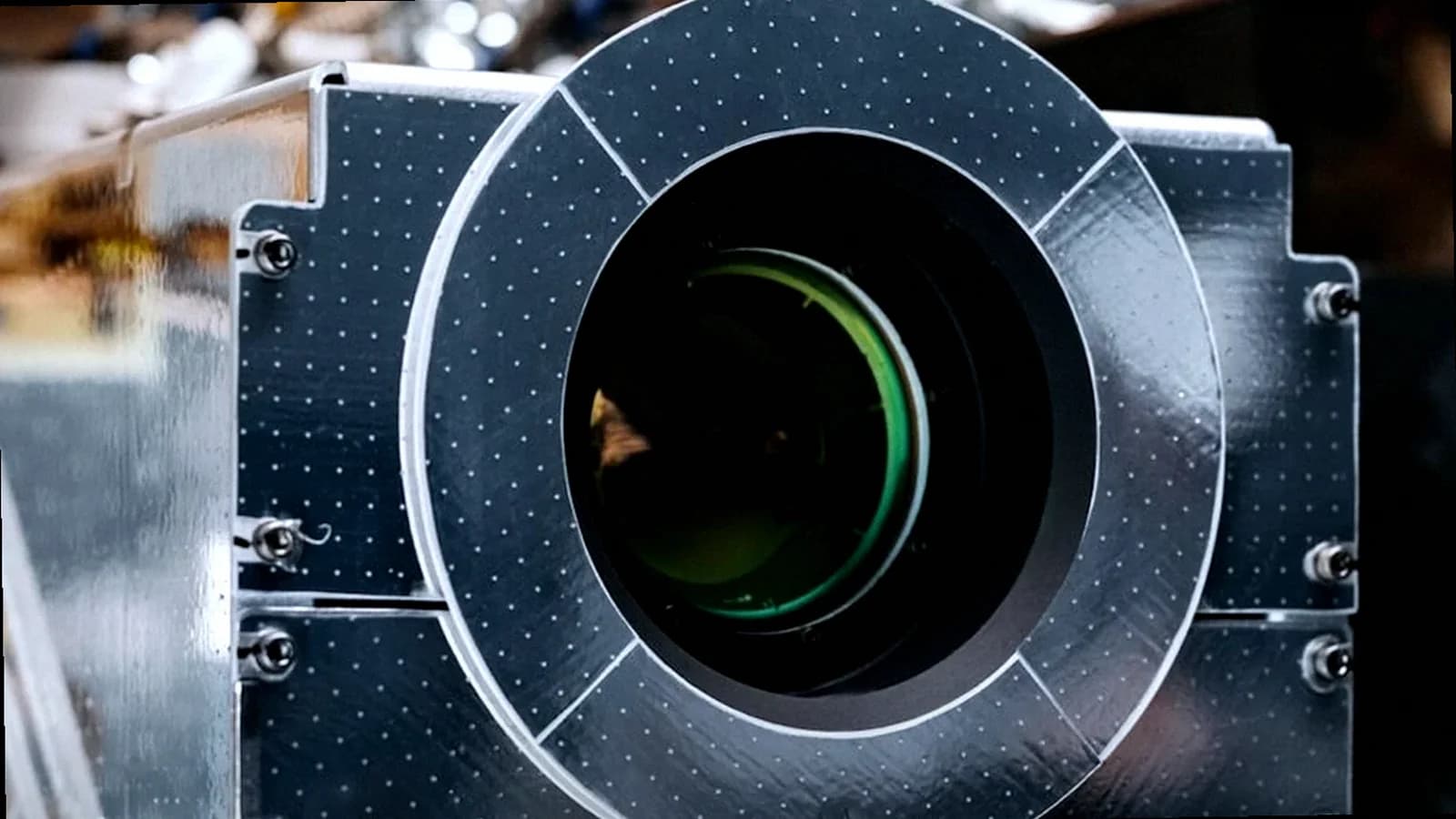
Defense hardware manufacturer Anduril Industries has revealed operational flight telemetry from its maiden commercial spacecraft, confirming the first in-orbit operational demonstration of its proprietary long-wave infrared (LWIR) space tracking payload. Launched into polar orbit aboard a rideshare mission, the experimental smallsat achieved autonomous target acquisition of passing orbital bodies while operating entirely within Earths optical shadow, marking a critical transition from theoretical orbital sensing to combat-capable, low-cost space domain awareness.
Traditional space domain awareness (SDA) assets rely heavily on visible-spectrum ground-based radar and high-magnification terrestrial optical telescopes. When orbital assets transit the night side of Earth, reflective solar glint vanishes completely, effectively blinding standard electro-optical reconnaissance networks. Ground radars compensate partially, but their operational range drops precipitously when attempting to track low radar-cross-section nanosatellites or non-cooperative orbital debris operating in higher medium-Earth and geostationary belts. Andurils newly deployed orbital thermal-imaging payload bypasses this fundamental physical constraint by measuring passive blackbody heat emission rather than reflected solar illumination.
In the vacuum of space, artificial satellites exist in extreme thermal gradients. Illuminated surfaces regularly exceed 120 degrees Celsius, while shaded components plunge toward minus 100 degrees Celsius. However, internal electrical components, traveling-wave tube amplifiers, battery management circuits, and processing avionics continuously generate waste heat that must be radiated out to maintain thermal equilibrium. This dissipated heat radiates into space primarily across the long-wave infrared spectrum between 8.0 and 14.0 micrometers.
By positioning an LWIR optical sensor directly in orbit, Andurils spacecraft operates above atmospheric attenuation, water vapor absorption bands, and tropospheric turbulence that severely degrade ground-based infrared telescopes. When an adversary satellite passes through Earths shadow in an attempt to mask orbital maneuvers, inclination changes, or rendezvous-and-proximity operations (RPO), its thermal signature remains intensely bright against the 2.7 Kelvin cosmic microwave background.
Historically, high-performance infrared sensors in military reconnaissance satellites have required complex cryogenic cooling systems—either consumable liquid helium dewars or closed-cycle mechanical Stirling coolers. While cryocoolers reduce detector thermal noise to near-zero levels, they introduce severe mass penalties, high electrical power consumption (often exceeding several hundred watts), and mechanical vibrations that disturb precision optical stabilization.
Andurils engineering team chose a radically divergent architecture: an uncooled vanadium oxide (VOx) microbolometer array optimized for high frame-rate spaceflight:
Detector Array Resolution: A custom 1280x1024 pixel microbolometer focal plane array with a 12-micrometer pixel pitch, providing exceptional instantaneous field of view without requiring active cooling.
Radiation-Tolerant Refractive Optics: Precision diamond-turned Germanium (Ge) and Chalcogenide glass lenses coated with anti-reflective diamond-like carbon (DLC) films to withstand atomic oxygen erosion and solar ultraviolet degradation in low-Earth orbit.
Passive Thermal Management: The optical housing is coupled via dual-phase loop heat pipes to a body-mounted passive radiator panel angled perpendicular to the solar vector, maintaining detector stability between 180 Kelvin and 210 Kelvin purely through radiative heat loss to deep space.
On-Board Real-Time Edge Processing: Telemetry streams directly into an FPGA-accelerated computer vision processor running Andurils Lattice autonomous operating system, enabling on-orbit track formation rather than transmitting raw high-bandwidth thermal video to Earth.
The fundamental challenge of orbital infrared sensing is separating genuine high-speed satellites from cosmic ray particle strikes, stray reflections, and stellar background noise. Andurils spacecraft executes an autonomous multi-stage detection pipeline:
First, the sensor performs background blackbody calibration during each orbital cycle, constructing a dynamic spatial noise map of the focal plane array. As stars sweep across the sensors field of view due to orbital motion, the on-board processor matches their coordinates against an internal stellar catalog (Hipparcos and Gaia datasets) to compute sub-arcsecond spacecraft attitude determination.
Second, any warm point source exhibiting non-sidereal apparent motion is designated as an anomalous target. The algorithm calculates optical flow vectors across consecutive 250-millisecond frames, rejecting single-frame anomalies caused by South Atlantic Anomaly (SAA) radiation strikes.
Third, when a coherent track is confirmed, the on-board Lattice software computes an initial line-of-sight orbit determination (IOD). By fusing multi-point angular measurements with the host spacecrafts precise GPS ephemeris, Lattice estimates the target objects semi-major axis, eccentricity, and inclination in real time.
The militarization of Earth orbit has accelerated dramatically over the past five years. Both peer nations and private commercial entities have demonstrated aggressive rendezvous and proximity operations, where hunter satellites maneuver within hundreds of meters of critical communications and early-warning orbital assets.
Previously, covert rendezvous maneuvers were deliberately scheduled during eclipse phases—the periods when a satellite enters Earths shadow—to prevent terrestrial optical tracking networks from documenting the burn. With persistent in-orbit night-vision sensing, eclipse windows no longer provide concealment. Real-time detection of delta-V burns during darkness allows defense commands to issue immediate warning orders to threatened satellite operators, triggering automated defensive station-keeping maneuvers before an interceptor can establish proximity.
Furthermore, the uncooled architecture drastically alters smallsat economics. While traditional classified military surveillance satellites cost upwards of several hundred million dollars and require decade-long procurement cycles, Andurils smallsat sensor suite fits inside an ESPA-class or 16U bus weighing less than 45 kilograms. A proliferated constellation of several dozen low-cost sensors distributed across diverse orbital inclinations can provide gap-free, continuous global surveillance of both Low Earth Orbit (LEO) and Geostationary Earth Orbit (GEO).
Following the successful telemetry downlinks and in-orbit verification of the LWIR sensor, Anduril plans to manufacture and launch expanded batches of the sensor payload throughout 2027 and 2028. The company is actively integrating the payload with its autonomous command-and-control software suite, allowing automated satellite clusters to cross-cue each other: when one satellite detects an unexpected thermal bloom indicative of a rocket motor firing, neighboring spacecraft will autonomously re-orient their optical boresights to triangulate the targets trajectory.
As orbital congestion grows and the demarcation between civilian and military space operations blurs, autonomous night-vision capabilities will transition from specialized intelligence assets to mandatory baseline avionics for sovereign space defense.
Primary source
Ars Technica (opens in a new tab)Pulse Wire Briefing
Real-time security & systems dispatches, straight to your inbox.


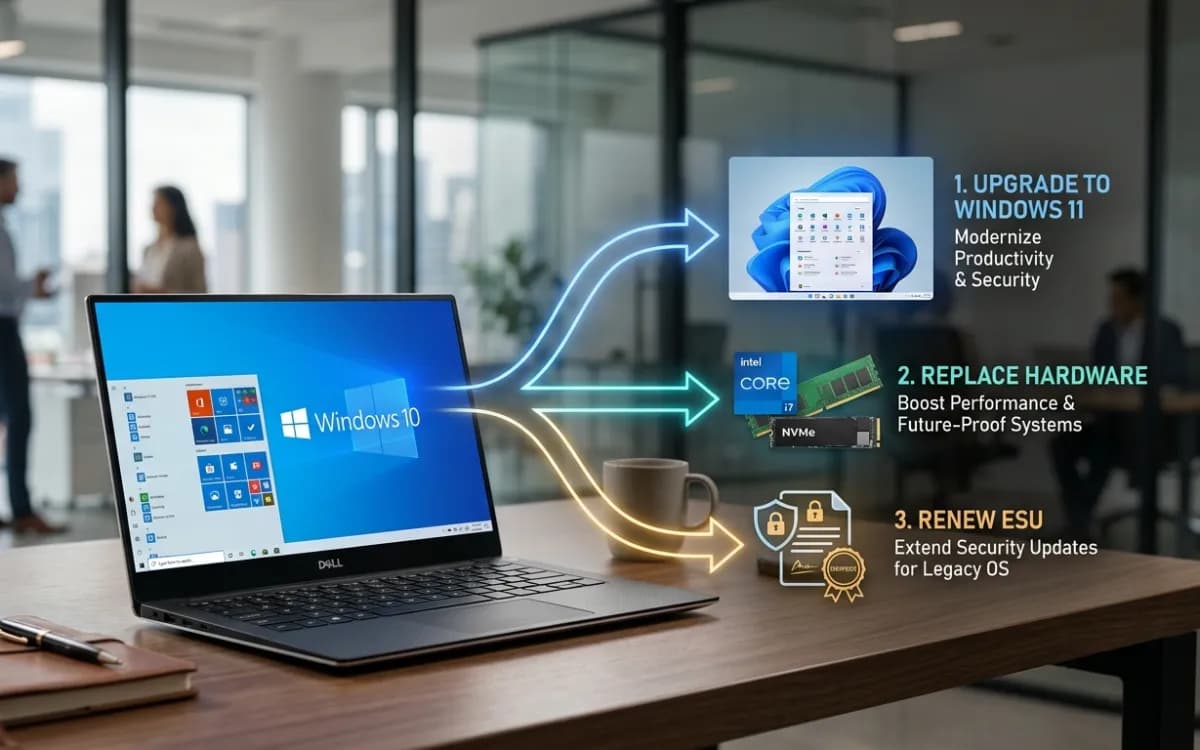
A per-seat decision model for mixed estates choosing between $122-per-device renewals, Windows 11 upgrades and hardware replacement.

Language models are trained to guess, not to say "I don't know." Here is why they fabricate citations and numbers, plus the validation workflow we use.
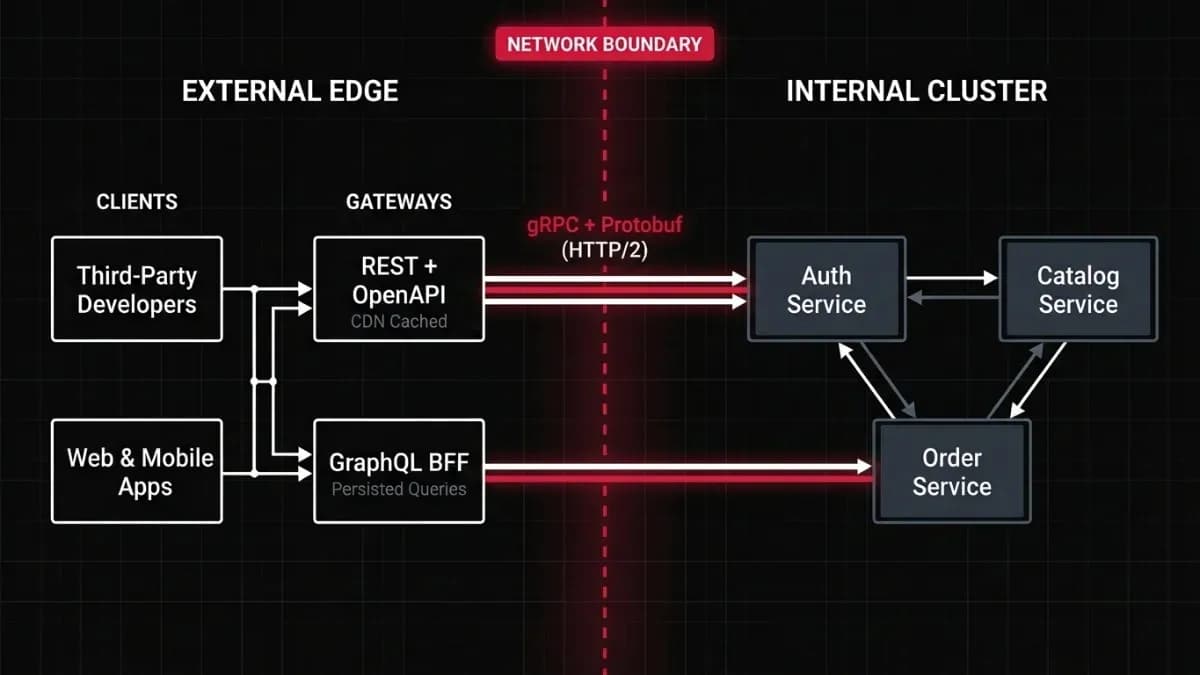
Each style wins one axis and loses another. How caching, schema change, clients, operations and latency decide it, plus the hybrid most teams end up running.
Discussion (…)