
2 min readRead
The Zen 6 flagship pushes data center density to 1,024 threads per dual-socket node alongside high-bandwidth MRDIMM support.
AMD has officially introduced hardware availability for its 6th Gen EPYC server processor family, codenamed Venice, led by the flagship 256-core EPYC 9996 on Socket SP7. Built on TSMC’s N2 process using Zen 6 and Zen 6c microarchitectures, the new platform targets massive thread density, high-frequency compute, and expanded I/O bandwidth. In dual-socket configurations, two EPYC 9996 processors deliver 512 cores and 1,024 threads, supported by 16 memory channels that accommodate DDR5-8000 and MRDIMM-12800 alongside 96 lanes of PCIe 6.0 connectivity, as detailed in independent performance testing by Phoronix.
Architecturally, AMD builds Zen 6 and Zen 6c on an identical microarchitecture while altering layout density. The standard Zen 6 core complex die scales from eight cores in Turin to 12 cores with 48MB of shared L3 cache, reaching clock speeds up to 5.3GHz on parts like the 96-core EPYC 9686F. Meanwhile, Zen 6c packs 32 cores into a single die with 128MB of shared L3, doubling both the core count and the per-core L3 cache compared to previous-generation Zen 5c dies. The flagship EPYC 9996 features 1,024MB of aggregate L3 cache, a 2.55GHz base clock, a 4.1GHz boost, and a 600W default TDP priced at $14,904 in 1KU volumes.
Hardware benchmarks reveal substantial generational and competitive compute gains. Rigorous platform evaluations from StorageReview show a dual-socket EPYC 9996 system solving large OpenFOAM meshes 2.6x faster and executing AES-256-GCM encryption 1.7x faster at 6.8TB/s compared to the 384-core Turin flagship. Shifting workloads to MRDIMM-12800 memory improved STREAM Triad memory bandwidth by 58% and reduced mesh solution times by 21%. Against NVIDIA Vera, Venice achieved 4.7x faster benchPEP execution, 5.4x faster encryption, and lowered HammerDB payment tail latency by 30% to 51%, while Vera retained distinct interconnect throughput advantages via NVLink-C2C.
The AMD 6th Gen EPYC server processor family, codenamed Venice, is built on TSMC's N2 process utilizing Zen 6 and Zen 6c core chiplets Storagereview. Operating on the enterprise-focused SP7 platform, the architecture supports up to sixteen memory channels with options for DDR5 RDIMMs or MRDIMMs Storagereview Phoronix. The flagship EPYC 9996 features 256 cores and 512 threads per socket, carrying a default CPU power rating of 600W that is configurable down to 400W Phoronix. Architecturally, standard Zen 6 core complex dies expand to twelve cores, each maintaining 1KB of private L2 cache and an increased shared L3 cache of 48MB Storagereview. Conversely, Zen 6c implementation provisions 32 cores per CCD with 128MB of shared L3 cache Storagereview. Both core variations share the same microarchitecture and data paths, though Zen 6c is physically compacted to prioritize density and power efficiency over maximum frequency Storagereview. Platform power management incorporates three specific controls. Unified Power Provisioning allocates a single power budget across both the system-on-chip and its attached DIMMs to reclaim stranded rack capacity Storagereview. Utilization-Based Power Scaling dynamically adjusts socket power according to active core counts, reserving headroom for burst workloads Storagereview. Additionally, Frequency Adaptive Spectrum Technology enforces a floor frequency per core group to segment performance tiers within identical physical silicon Storagereview. The SP7 platform further provides 96 lanes of PCIe Gen6 connectivity per socket Phoronix. These structural enhancements ensure the platform accommodates diverse computational demands ranging from dense multi-tenant hosting environments to high-performance computing nodes.
Evaluating the economics and architectural positioning of the AMD EPYC Venice SP7 platform requires a close look at pricing, core configurations, and comparative benchmarks against competing enterprise offerings. According to hardware evaluations on StorageReview, the flagship 256-core EPYC 9996 processor carries a 1KU unit price of $14,904 USD as detailed in independent testing Phoronix. This pricing places the high-density processor squarely within the tier for demanding enterprise servers and AI hosts, where compute density and memory bandwidth dictate total cost efficiency.
The 6th Gen EPYC family introduces significant generational improvements in memory subsystems and core scalability. Shifting from standard DDR5-8000 to MRDIMM-12800 configurations increases STREAM Triad bandwidth substantially, directly impacting performance in memory-bound workloads. The architecture's ability to scale across various power envelopes—from bulk agentic hosting configurations down to lower power thresholds—allows data centers to manage thermal and electrical budgets more effectively. Platform controls like Unified Power Provisioning further address stranded rack capacity, offering operators potential efficiency gains without sacrificing raw compute throughput.
| Processor Model | Cores / Threads | Base / Max Boost | L3 Cache | Default Power | 1KU Unit Price |
|---|---|---|---|---|---|
| EPYC 9996 | 256 / 512 | 2.55 / 4.1GHz | 1,024MB | 600W | $14,904 |
| EPYC 9686F | 96 / 192 | 4.05 / 5.3GHz | 384MB | 600W | N/A |
Comparative metrics indicate strong positioning against alternative data center architectures. In database testing, single sockets demonstrate competitive performance across MySQL and PostgreSQL workloads, while cryptographic and compression workloads show notable speedups over previous generations and competing platforms. The balance between high core counts provided by Zen 6c implementations and high clock speeds found on frequency-optimized parts like the EPYC 9686F gives enterprise buyers distinct architectural choices depending on whether their primary bottlenecks involve raw thread parallelism, single-thread latency, or memory subsystem throughput.
| Label | Cores | Default Power (W) |
|---|---|---|
| EPYC 9996 | 256 | 600 |
| EPYC 9686F | 96 | 600 |
Overall, the economic viability of the Venice platform hinges on workload characteristics. Memory-intensive applications benefit immensely from the move to 16 channels of faster memory types, whereas dense virtualization tasks leverage the high core counts per socket to maximize rack density.
Independent reaction was not available at publication time. While initial testing highlights substantial performance strides for AMD's 6th Gen EPYC server processor lineup codenamed Venice, several architectural limitations and open questions remain. According to the data evaluated in the StorageReview analysis, raw memory bandwidth and interconnect capabilities present notable boundaries when compared directly against competitor platforms. Specifically, Venice trails NVIDIA Vera on raw STREAM Triad bandwidth under standard DDR5-8000 configurations, and Vera's NVLink-C2C delivers significantly higher remote-socket bandwidth than AMD's xGMI link. Platform-level power controls such as Unified Power Provisioning, Utilization-Based Power Scaling, and Frequency Adaptive Spectrum Technology require observation as OEM firmware matures to determine how effectively they perform outside of default testing parameters.
Additional milestones on the roadmap will dictate broader adoption schedules. While SP7 parts are generally available with OEM systems shipping alongside upcoming Azure and OCI instances, follow-up variants carry staggered release dates. The enterprise-focused Venice SP8 platform and the LPDDR-based Verano architecture are slated to arrive next year in 2027, according to details outlined in Phoronix's hardware coverage. Consequently, prospective enterprise buyers must weigh current single-socket and dual-socket benchmark results against upcoming platform expansions and software optimizations designed for Zen 6 and Zen 6c cores.
Primary source
Storagereview (opens in a new tab)Pulse Wire Briefing
Real-time security & systems dispatches, straight to your inbox.


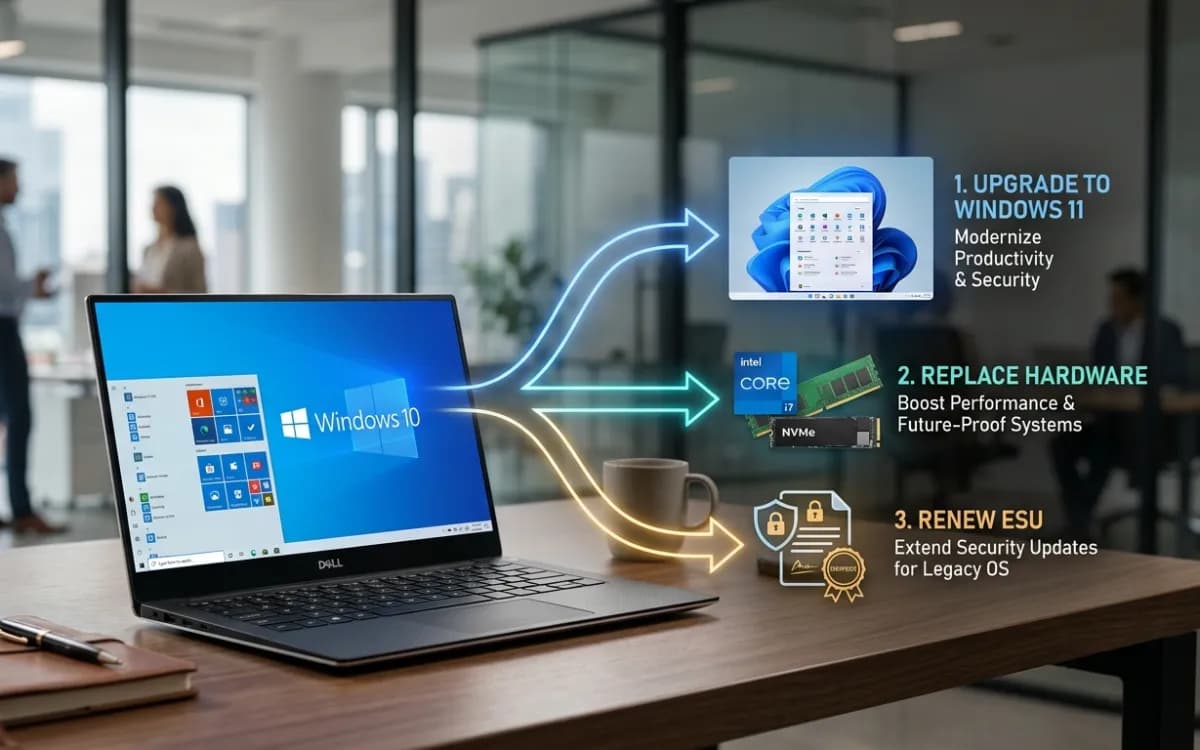
A per-seat decision model for mixed estates choosing between $122-per-device renewals, Windows 11 upgrades and hardware replacement.

Language models are trained to guess, not to say "I don't know." Here is why they fabricate citations and numbers, plus the validation workflow we use.
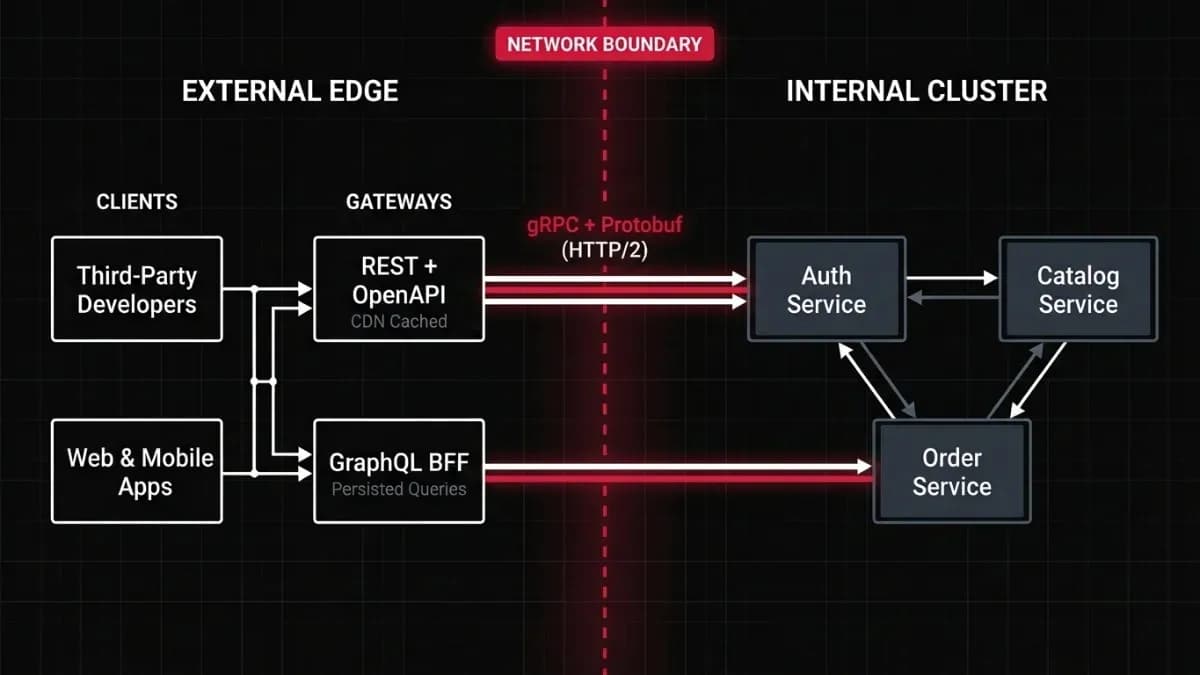
Each style wins one axis and loses another. How caching, schema change, clients, operations and latency decide it, plus the hybrid most teams end up running.
Discussion (…)